NNPC signs new crude deal with Dangote refinery


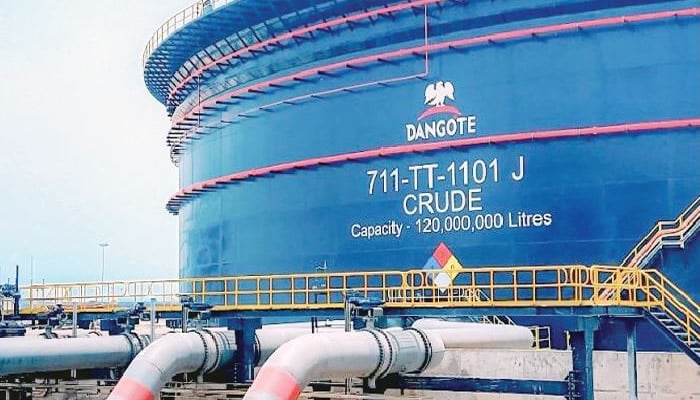
The Nigerian National Petroleum Company Limited has signed a fresh two-year crude oil supply agreement with the Dangote Petroleum Refinery, a move that is expected to strengthen local refining and stabilize fuel availability across the country. The agreement, which was finalized in August and takes effect through 2027, secures a steady flow of crude oil to the 650,000-barrel-per-day facility located in Lekki, Lagos.
The deal comes as part of the Federal Government’s determination to prioritize the supply of crude oil to the refinery, particularly in naira, under the crude-for-naira initiative introduced last year by President Bola Tinubu. Data from the company shows that since October 2024, a total of 82 million barrels of crude oil have been allocated to the Dangote refinery, with about 60 percent of that allocation, equivalent to 49.3 million barrels, supplied in naira. This arrangement is designed to reduce pressure on the foreign exchange market while ensuring that refined products are available to Nigerian consumers in local currency.
The new agreement also settles earlier tensions that arose when Dangote temporarily suspended the sale of petrol in naira, citing the exhaustion of its crude-for-naira allocation. That standoff was quickly resolved after the intervention of the Naira-for-Crude Technical Committee, leading to the immediate resumption of petrol sales in naira.
According to Andy Odeh, Chief Corporate Communications Officer of NNPC, the state-owned energy company continues to provide crude to Dangote in naira, with all deliveries reconciled periodically in partnership with the Nigerian Midstream and Downstream Petroleum Regulatory Authority. He confirmed that three crude cargoes were supplied in August, while five cargoes each were allocated for September and October. Odeh explained that crude loading for August had been completed and September’s allocation was already underway, with two vessels currently preparing to load at designated terminals.
From October 2024 to October 2025 alone, 82 million barrels will have been supplied, and the renewed two-year contract guarantees that this momentum will be sustained. Dangote’s media team has yet to provide further details, but industry observers see the deal as a significant step in aligning government policy with domestic energy needs.
The Steering Committee of the Domestic Crude Oil and Refined Products Sales in Local Currency Initiative, chaired by the Minister of Finance and Coordinating Minister of the Economy, Wale Edun, also moved to reassure Nigerians that there would be no disruption in crude allocation. In a statement, the committee confirmed that the arrangement had been harmonized and would continue as planned. Other key officials present at the reconciliation meeting included the Minister of Budget and Economic Planning, Senator Atiku Bagudu, the Chairman of the Federal Inland Revenue Service, Zacch Adedeji, representatives of the Central Bank of Nigeria, Afreximbank, the Nigerian Midstream and Downstream Petroleum Regulatory Authority, and the NNPC.
The committee stressed that the Federal Government remained fully committed to energy security, consumer protection, and price stability in the domestic petroleum products market. Officials emphasized that selling crude in naira is not only a tool for ensuring stable fuel supply but also a way of shielding the economy from foreign exchange volatility.
Marketers have welcomed the development, describing the renewed deal as critical for ensuring fuel stability. Hammed Fashola, Vice President of the Independent Petroleum Marketers Association of Nigeria, said the agreement was a positive move that would help stabilize the market and prevent fuel shortages. He recalled the positive impact when the program first began, noting that its renewal would restore confidence and continuity.
Similarly, IPMAN spokesman Chinedu Ukadike praised the move but urged the government not to focus solely on Dangote. He called on authorities to extend the crude-for-naira initiative to modular refineries across the country, arguing that this would further boost refining capacity and reduce reliance on imported fuels. According to him, “You cannot be exporting crude while Dangote is importing crude. By supplying crude oil to Dangote and also supporting modular refineries, we can achieve uninterrupted supply of petroleum products across the country, which will ultimately benefit consumers.”
Ukadike further urged the government to issue a white paper to resolve the ongoing disputes between Dangote and the Petroleum and Natural Gas Senior Staff Association of Nigeria. He warned that such conflicts, if left unresolved, could disrupt operations and threaten the country’s economy.
The crude-for-naira initiative was introduced last year when the Dangote refinery faced a shortage of local crude and had to import feedstock from the United States, a costly alternative that made refining more expensive. By prioritizing domestic supply, the government hopes to ensure that the country’s biggest refinery operates at full capacity, thereby reducing dependence on imported petroleum products and stabilizing prices.
The renewed agreement also represents a broader commitment by the Tinubu administration to support local refining, reduce fuel import bills, and strengthen energy independence. The fact that the deal extends until 2027 provides certainty for the Dangote refinery, marketers, and consumers, who have been anxious about potential supply disruptions.
For ordinary Nigerians, the agreement promises more consistent availability of petrol, diesel, and kerosene at filling stations, as well as a more stable pricing environment. With global oil markets often unpredictable, having a secure domestic supply base is critical. By allocating crude in naira, the government is also reducing the reliance on scarce foreign exchange, a move that could ease pressure on the naira and improve liquidity in the financial markets.
As crude continues to flow steadily to the Dangote refinery under the new deal, the hope is that Nigerians will experience fewer fuel shortages, reduced import dependency, and a gradual strengthening of local refining capacity. While challenges remain, especially in extending similar benefits to modular refineries and resolving labor disputes, the agreement marks a major milestone in the country’s push toward energy self-sufficiency.


Responses