Opposition Heavyweights Meet in Kano as 2027 Political Realignment Speculation Grows

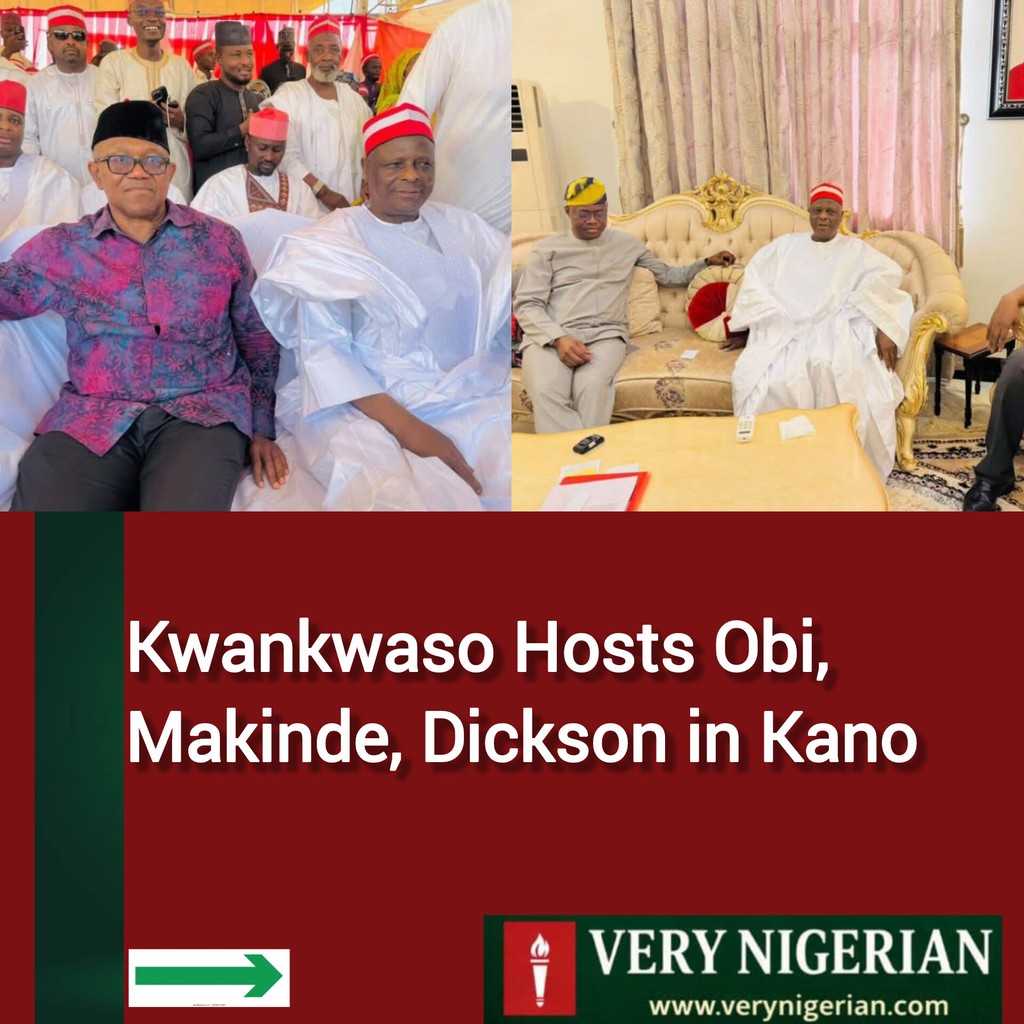
A notable political gathering in Kano has sparked fresh conversations about a possible opposition coalition ahead of Nigeria’s 2027 general elections, as Rabiu Musa Kwankwaso hosted key political figures during the Sallah celebrations.
Among those present at the high-profile meeting were Peter Obi, Seyi Makinde, and Seriake Dickson. The gathering, though officially described as a festive visit, has been widely interpreted as politically significant, especially given the current state of opposition politics in Nigeria.
Sharing moments from the event, Kwankwaso described the meeting as a joyful Sallah celebration, wishing Nigerians peace and prosperity. However, beyond the ceremonial tone, analysts believe the convergence of these influential figures reflects ongoing behind-the-scenes consultations aimed at reshaping the opposition landscape.
The presence of Peter Obi—who was the Labour Party’s presidential candidate in 2023 and is now reportedly aligned with the African Democratic Congress (ADC)—adds an interesting layer to the political equation. Obi remains one of the most visible opposition figures nationally, with a strong support base, particularly among younger voters and urban populations.
Governor Seyi Makinde’s attendance is equally significant. As a sitting governor under the Peoples Democratic Party (PDP), his involvement suggests that internal realignments may be underway within the party or that cross-party collaboration is being explored. Similarly, Seriake Dickson, a seasoned political actor, brings experience and strategic depth to any emerging coalition discussions.
This is not the first sign of engagement among these figures. Earlier in February 2026, Kwankwaso and Makinde reportedly held a private meeting in Ibadan, further fueling speculation that talks of a broader alliance have been ongoing for some time.
The timing of the Kano meeting is particularly important. With the ruling All Progressives Congress (APC) maintaining strong control at the federal level, opposition parties face increasing pressure to consolidate if they hope to mount a serious challenge in 2027. Fragmentation among opposition groups was widely seen as a key factor in previous electoral outcomes, and there is growing recognition that unity may be essential going forward.
However, forming a viable coalition is far from straightforward. Each of the politicians involved commands their own support base and political structure, and questions around leadership, candidate selection, and party platform remain major hurdles. For instance, deciding who would emerge as a consensus presidential candidate could prove contentious, particularly among strong personalities like Kwankwaso and Obi.
Public reactions to the meeting have been sharply divided. Supporters of the opposition view it as a promising step toward building a united front capable of challenging the APC. Critics, on the other hand, dismiss it as symbolic, arguing that previous attempts at coalition-building have often collapsed due to internal disagreements and lack of clear strategy.
There is also the broader political reality to consider. The APC continues to enjoy the advantages of incumbency, including control over key political structures and influence across several states. Any opposition alliance would need not only unity but also a compelling message and grassroots mobilization to compete effectively.
Ultimately, while the Kano meeting may not immediately translate into a formal coalition, it signals that political maneuvering ahead of 2027 is already in motion. Whether these discussions evolve into a cohesive alliance or remain informal engagements will depend on how well these leaders can navigate their differences and align their ambitions with a shared vision.
As the political landscape continues to shift, one thing is clear: the road to 2027 has begun, and alliances—both formal and informal—will play a decisive role in shaping Nigeria’s next electoral contest.


Responses