ADC Slams Tinubu’s ₦58.18 Trillion 2026 Budget, Warns Nigeria Is ‘Building a House on Quicksand’


The African Democratic Congress (ADC) has launched a strong critique of the Federal Government’s proposed 2026 budget, describing it as fundamentally flawed, unsustainable, and disconnected from the economic realities facing Nigerians. The opposition party argues that the record-breaking ₦58.18 trillion appropriation bill presented by President Bola Ahmed Tinubu to the National Assembly is little more than a recycled spending plan that deepens fiscal instability rather than resolving it.
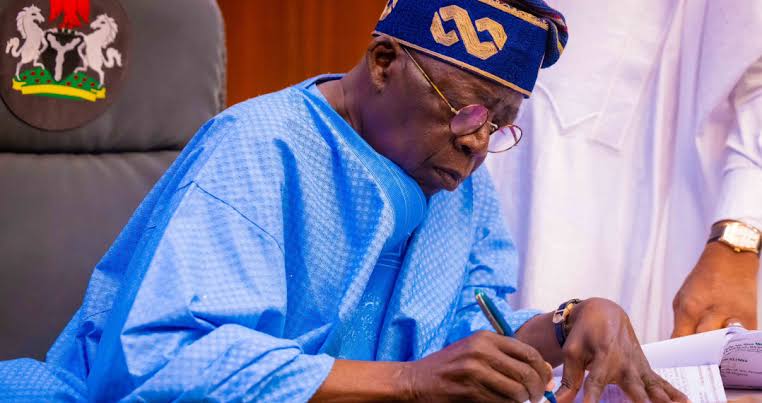
President Tinubu formally laid the 2026 budget before a joint sitting of the National Assembly on Friday, branding it the “Budget of Consolidation, Renewed Resilience and Shared Prosperity.” However, in a statement released on Monday, the ADC rejected this framing, insisting that the proposal amounts to a “copy-and-paste” of previous budgets that failed to deliver meaningful results.
Speaking through its National Publicity Secretary, Bolaji Abdullahi, the ADC said its team of economists carried out a preliminary assessment of the budget and found it lacking in originality, credibility, and fiscal discipline. According to Abdullahi, despite the lofty rhetoric surrounding the budget, it merely perpetuates what he described as years of fiscal recklessness, wishful projections, and weak implementation.
The party warned that, like the 2024 and 2025 budgets, the 2026 proposal risks ending up as another document that looks impressive on paper but delivers little in practice. Abdullahi noted that Nigeria is being asked to embrace a new fiscal framework at a time when the 2025 budget was only recently repealed and re-enacted—an action he described as unprecedented and symptomatic of administrative confusion.
“This government is attempting to build a house on quicksand,” the ADC spokesperson said, arguing that frequent changes in fiscal direction undermine investor confidence and long-term economic planning. He added that no serious economy can thrive when budget frameworks are repeatedly altered without accountability or clear outcomes.
One of the core concerns raised by the ADC is the widening budget deficit. While projected revenue for 2026 stands at about ₦34.33 trillion, total expenditure is pegged at ₦58.18 trillion, leaving a deficit of ₦23.85 trillion to be financed largely through borrowing. Abdullahi warned that approving the budget in its current form would push Nigeria deeper into debt and intensify economic hardship for citizens already struggling with inflation, high taxes, and declining purchasing power.
He further criticised the administration for postponing tough fiscal decisions while relying heavily on borrowing to fund both capital projects and routine government expenses. According to him, economic recovery cannot be achieved through monetary policy adjustments alone without credible budgeting, spending discipline, and a clear plan to grow revenue sustainably.
The ADC also raised alarm over Nigeria’s rising debt servicing obligations. Abdullahi pointed out that debt servicing costs are projected to rise from ₦12.63 trillion in 2024 to ₦15.52 trillion in 2026, a figure that nearly rivals capital expenditure. He described this trajectory as dangerous, arguing that Nigeria is increasingly borrowing not to grow but simply to survive.
“It is unforgivable to mortgage the future of the next generation in order to fund opaque and reckless spending today,” he said, adding that excessive debt would inevitably translate into higher taxes, reduced public services, and more pressure on ordinary Nigerians.
Beyond the numbers, the ADC accused the government of operating what it called “multiple budgets at the same time,” a situation it described as unprecedented fiscal disorder. The party insisted that without transparency, proper prioritisation, and political will to cut waste, increasing budget figures year after year would not translate into improved living standards.
In conclusion, the ADC urged the Federal Government to rethink its economic approach and adopt a new direction anchored on fiscal responsibility, transparency, and people-centred policies. According to the party, Nigeria does not need bigger budgets funded by debt, but smarter budgets that deliver real infrastructure, jobs, healthcare, education, and measurable improvements in citizens’ lives.
As debates over the 2026 budget continue in the National Assembly and the public space, the ADC’s intervention reflects growing concerns among Nigerians that rising government spending has yet to produce commensurate gains in welfare, development, or economic stability.



Responses