Atiku Blasts Tinubu, Warns Nigeria Drifting Toward Authoritarian Rule

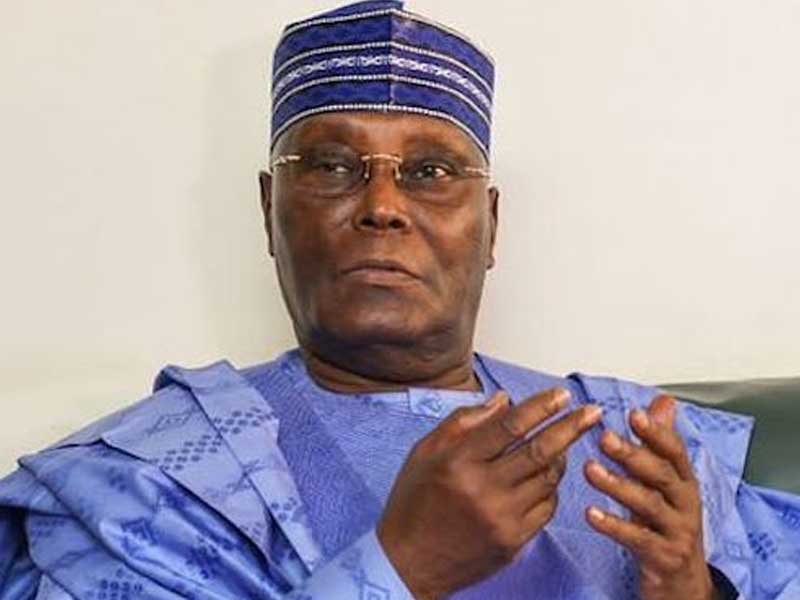
Former Vice President Atiku Abubakar has launched a scathing attack on President Bola Tinubu, accusing his administration of eroding democratic institutions and steering Nigeria toward authoritarian rule.
In a strongly worded statement released on Monday, Atiku condemned what he described as the unlawful actions of the Department of State Services (DSS), particularly the reported sealing of properties belonging to former Attorney General Abubakar Malami. He characterized the move as politically motivated and a clear abuse of state power.
According to Atiku, the DSS operation—allegedly carried out while the matter remains in court—signals a troubling pattern of intimidation and disregard for the rule of law. He described the development as part of a broader effort by the current administration to silence dissent and suppress opposition voices.
“This is not governance. This is intimidation,” Atiku stated, warning that security agencies are increasingly being used as tools for political persecution rather than national security.
The former vice president further argued that Nigeria is experiencing a steady breakdown of democratic norms. He accused the Tinubu-led government of deploying state institutions to target perceived political enemies, thereby weakening the country’s democratic foundations.
Atiku also alleged that the administration is orchestrating a deliberate campaign to neutralize opposition figures ahead of the 2027 general elections. He claimed that prominent politicians, including former Kaduna State governor Nasir El-Rufai and Malami, are being pressured through investigations and state actions to either defect to the ruling party or face consequences.
Describing the situation as “political extortion,” Atiku said the message being sent is clear: align with the ruling party or risk being targeted. He warned that such tactics could effectively turn Nigeria into a one-party state, where opposition participation becomes meaningless.
“When opposition is criminalised and dissent is punished, elections become a mere formality,” he said, questioning the credibility of future electoral processes under such conditions.
Drawing parallels with Nigeria’s past, Atiku likened the current political climate to the era of military ruler Sani Abacha, particularly referencing the controversial self-succession agenda that defined that period. He cautioned that repeating such a trajectory could have severe consequences for the country’s stability and international reputation.
Beyond political repression, Atiku accused the government of weaponizing anti-corruption agencies to coerce politicians into joining the ruling party. He argued that this trend reflects a deeper attempt to consolidate power rather than strengthen governance.
“No individual has the right to hijack the destiny of over 200 million Nigerians just to cling to power,” he stated, emphasizing that leadership should be based on accountability and democratic principles.
He concluded by stressing that democracy thrives on competition and freedom of choice, warning that any attempt to stifle these principles could lead to dictatorship in civilian clothing.
The remarks have since sparked widespread reactions across political circles, with supporters echoing concerns about democratic backsliding, while critics argue that Atiku’s comments are politically motivated.
As Nigeria approaches another election cycle, the debate over the state of its democracy continues to intensify, highlighting deep divisions within the political landscape.


Responses