Conoil and TotalEnergies Seal Major Production Deal Aimed at Expanding Nigeria’s Oil and Gas Output

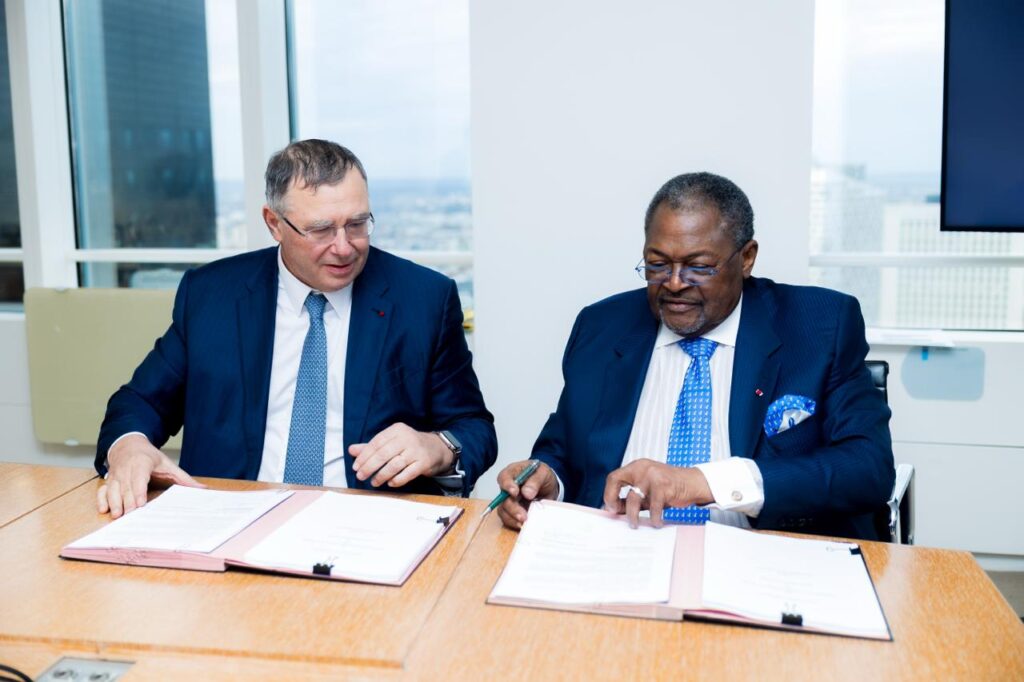
In a significant move expected to enhance Nigeria’s oil and gas production capacity, Conoil Producing Limited has entered into a wide-ranging partnership with TotalEnergies Limited. The two energy giants formalized a major production agreement in Paris, France, signaling renewed confidence in Nigeria’s hydrocarbon sector and a shared commitment to develop its vast natural resources.
The contract was signed during a ceremony held on Thursday at TotalEnergies’ headquarters located in La Défense, one of Paris’ key business districts. Representing Conoil Producing Limited was its chairman, Dr. Mike Adenuga Jr., a globally recognized businessman and Commander of the French Légion d’Honneur (CdrLR). On behalf of TotalEnergies, the agreement was inked by its Chairman and Chief Executive Officer, Mr. Patrick Pouyanné. Their meeting reflects not only a strong business relationship but also a long-standing alliance between Nigeria and France in the energy sector.
Although full details of the contract were not disclosed in the initial announcement, the scope of the deal is widely described as “massive,” hinting at extensive operational collaboration, technological investment, and possibly the accelerated development of new or existing oilfields. Industry analysts anticipate that the partnership could lead to increased crude extraction, enhanced gas recovery, and a boost to Nigeria’s overall upstream performance at a time when the country seeks to stabilize production and attract fresh investment.
Observers note that the involvement of two major industry players—Conoil Producing, one of Nigeria’s prominent indigenous exploration and production companies, and TotalEnergies, a leading multinational with decades of operations in Nigeria—could trigger new momentum within the petroleum sector. Experts also highlight that such collaborations help reinforce investor confidence, especially as Nigeria continues working toward improved regulatory stability following the introduction of the Petroleum Industry Act (PIA).
Public reaction to the news has been mixed but lively. Some commenters expressed admiration for Mike Adenuga, often described as a reclusive, camera-shy billionaire whose strategic moves rarely make headlines until they are finalized. Others used the opportunity to discuss the global transition away from fossil fuels, arguing that the world is steadily embracing renewable energy and that Nigeria must prepare for this shift. Still, several contributors countered that hydrocarbons will remain indispensable for decades and that oil and gas continue to anchor the nation’s economy.
Another thread of discussion focused on downstream implications. A number of readers noted that while the announcement is positive, the benefits do not directly impact shareholders of Conoil Marketing Plc or TotalEnergies’ Nigerian marketing subsidiary, since the production units involved are not listed on the Nigerian Exchange (NGX). Some even suggested that Conoil and TotalEnergies should explore building a joint refinery in Lagos to support their downstream businesses and strengthen local fuel supply.
Additionally, several commenters pointed out the growing competitive environment created by the Dangote Refinery, which has pushed other major players to reactivate dormant investments. According to them, the entry of such a powerful private refinery has awakened activity across Nigeria’s energy landscape, forcing companies to expand, collaborate, and innovate.
Despite the varied opinions—ranging from optimism to skepticism—the consensus is that the Conoil–TotalEnergies deal marks an important development. Whether viewed from the lens of investment, energy security, or national economic growth, the agreement reflects renewed commitment to rejuvenating Nigeria’s oil and gas sector at a crucial moment in global energy history.



Responses