El-Rufai Freed on Compassionate Bail Amid Mounting Legal Storm

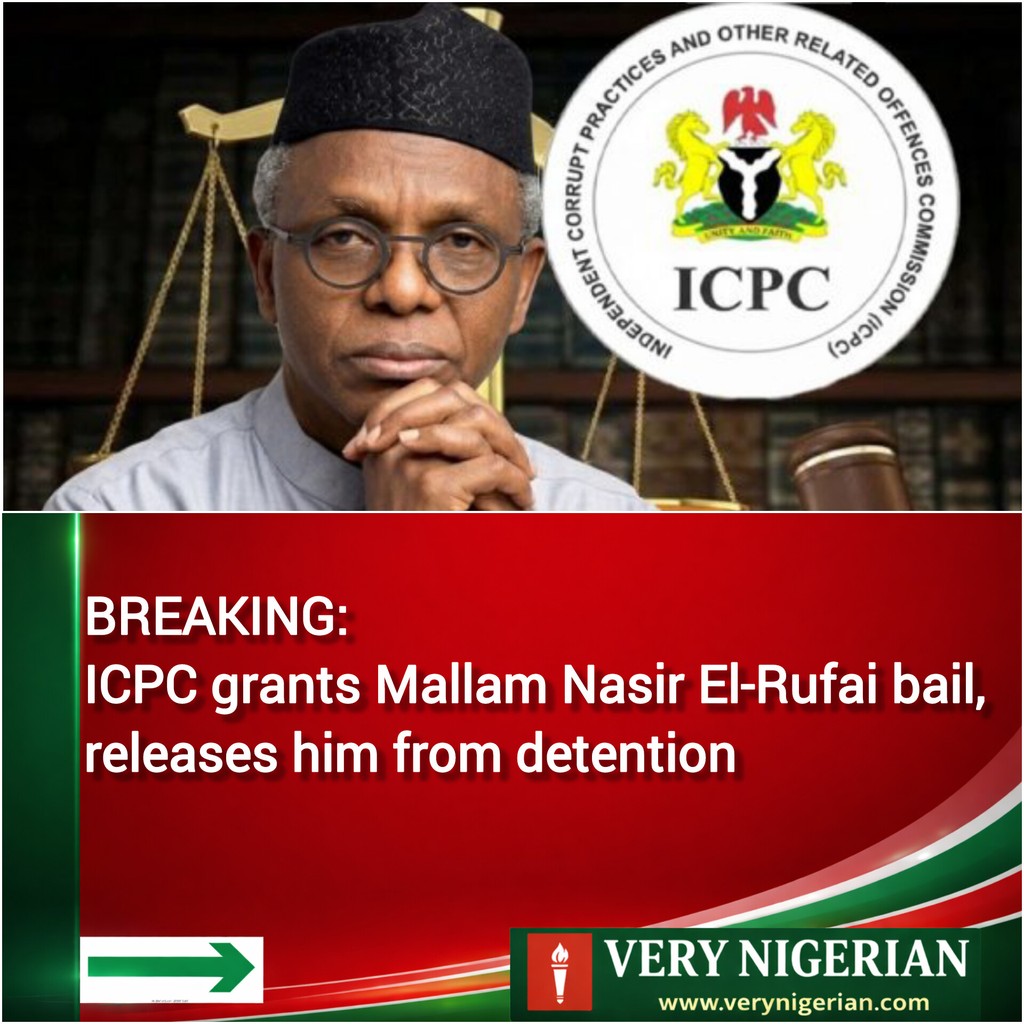
Former Kaduna State governor, Nasir El-Rufai, has been granted temporary bail by the Independent Corrupt Practices and Other Related Offences Commission (ICPC), allowing him to attend the funeral rites of his late mother, Hajiya Umma El-Rufai. The decision, described as being made on compassionate grounds, comes after weeks of detention and intensifying legal battles across multiple courts.
According to sources close to the family, El-Rufai’s mother passed away in Cairo, Egypt, prompting urgent appeals for his release to enable him to participate in burial arrangements. Confirmation of his temporary freedom came through his son, Bashir El-Rufai, who shared the update publicly while expressing appreciation to supporters and raising concerns about the circumstances surrounding his father’s detention.
Despite the development, the ICPC has yet to issue an official statement outlining the specific conditions attached to the bail or clarifying how long the former governor will remain out of custody. The lack of detailed communication has fueled public debate and speculation, particularly given the high-profile nature of the case and the political undertones many observers believe surround it.
El-Rufai has been in ICPC custody since February 18, following a series of legal entanglements tied to allegations of financial misconduct. On March 24, he was formally arraigned at the Federal High Court in Kaduna alongside a co-defendant on charges that include the alleged conversion and possession of public property, as well as money laundering. He pleaded not guilty, maintaining his innocence as the court adjourned ruling on his bail application to March 31, 2026.
Complicating matters further, the Department of State Services (DSS) has also filed separate charges against him at the Federal High Court in Abuja. These charges relate to alleged unlawful interception of communications involving the National Security Adviser, Nuhu Ribadu, purportedly in violation of the Cybercrimes Act. His arraignment in that matter is scheduled for April 23, 2026, adding another layer to an already complex legal situation.
In response, El-Rufai has launched counter-suits against government authorities, accusing them of unlawful actions, including the raid on his Abuja residence and alleged wiretapping. His legal team argues that the charges are politically motivated and part of a broader effort to undermine him, though these claims remain unproven in court.
The roots of his current predicament trace back to February 2026, when he was initially detained by the Economic and Financial Crimes Commission (EFCC) over an alleged ₦423 billion misappropriation. Although he was granted administrative bail at the time, he was quickly re-arrested by the ICPC, signaling a coordinated and sustained legal pursuit by multiple agencies.
Public reactions to his temporary release have been sharply divided. While some view the bail as a humane and necessary step in light of his personal loss, others question why similar considerations are not consistently extended to less prominent detainees. Critics also point to the timing, suggesting that the decision may reinforce perceptions of selective justice within Nigeria’s legal and political systems.
Supporters, however, insist that the bail underscores the principle that compassion can coexist with accountability. They argue that allowing him to mourn his mother does not negate the seriousness of the charges he faces, nor does it interfere with the judicial process, which is expected to continue once the temporary relief period expires.
For now, El-Rufai’s release offers a brief reprieve from mounting legal pressures, but it does little to resolve the broader challenges ahead. With multiple court dates looming and investigations ongoing, the former governor remains at the center of one of Nigeria’s most closely watched political and legal dramas.




Responses