FG and ASUU in Fresh Dispute Over 2021 Agreement

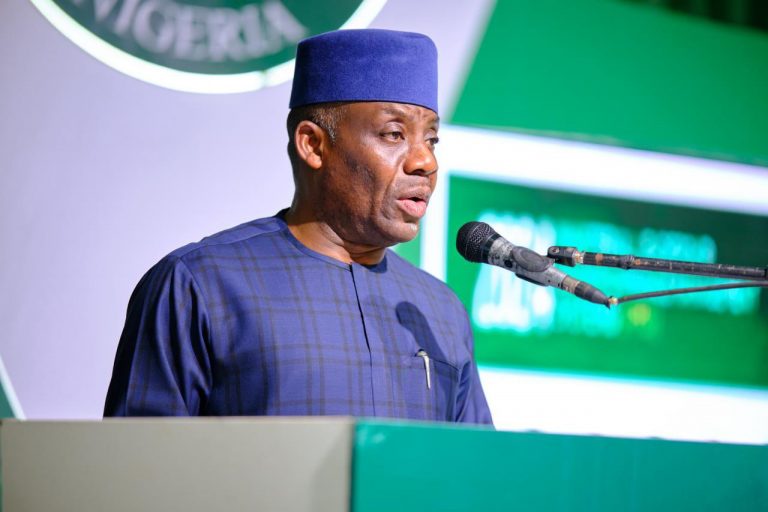
The long-standing tug of war between the Federal Government and the Academic Staff Union of Universities, ASUU, resurfaced on Thursday as both parties clashed over the validity of the much-talked-about 2021 agreement. At the centre of this latest controversy is the Minister of Education, Dr. Tunji Alausa, who stated categorically that the government never signed any agreement with the lecturers’ union, contrary to what many Nigerians have been led to believe.
Dr. Alausa, who addressed journalists in Abuja, explained that the documents ASUU frequently cites as proof of government commitments were nothing more than drafts and proposals exchanged during negotiations. According to him, these papers were never signed into law as binding agreements. He, however, assured the public that President Bola Tinubu’s administration was determined to bring an end to the long-drawn disputes with the union.
His words immediately reignited tension as ASUU leaders quickly countered his position. The union’s president, Professor Chris Piwuna, said the minister’s statement was evidence that the government had not improved its culture of poor record keeping. In his reaction, Piwuna lamented that the inconsistency in government positions often suggests a lack of proper handover from one administration to another, leaving important issues hanging unresolved for years.
This fresh dispute takes Nigerians back to 2021, when university lecturers downed tools for several months, demanding improved salaries, better conditions of service, proper funding for universities, and autonomy for academic institutions. Among their demands were a review of the laws governing the National Universities Commission and the Joint Admissions and Matriculation Board. At the time, talks between the government and the lecturers reportedly produced an agreement, one that ASUU has continued to reference as the basis for its agitations.
But Dr. Alausa insists otherwise. He told journalists that the so-called 2021 agreement was nothing but a draft that never received the government’s official seal. He went further to explain that the present administration was determined not to repeat past mistakes, and that future dealings with ASUU would be handled in a constitutional and sustainable manner.
To demonstrate its seriousness, he pointed to the N50 billion recently released by the Tinubu government for earned academic allowances owed to lecturers and other university staff. For him, that action was proof that the administration was not only willing but also capable of meeting genuine commitments.
According to the minister, the current government is more responsive and intends to keep every promise it makes. He emphasized that once an agreement is eventually reached with ASUU, it would not be a vague or half-baked document, but one that is implementable and backed by the constitution. “We will have a clean agreement, an agreement that is actionable and implementable in a sustainable manner,” he assured.
Dr. Alausa further revealed that the government had gone through ASUU’s proposals line by line, identifying areas where the federal government had the capacity to deliver. A counter-proposal has now been drafted, and a high-level technical committee has been set up to refine it into a final document.
The technical team, according to him, is chaired by the Permanent Secretary of the Ministry of Education. Other members include the Solicitor General of the Federation, the Permanent Secretary of the Ministry of Justice, the Permanent Secretary of the Ministry of Labour and Productivity, the Chairman of the Salary and Wages Commission, the Executive Secretary of the National Universities Commission, the Executive Secretary of TETFund, and the Director General of the Budget Office. The Director of the University of Education will serve as secretary.
The team has been tasked with producing a “clean report” that will guide the next phase of talks with ASUU. Once completed, the document will be handed over to the Yayale Ahmed Committee, which will serve as an intermediary between the government and the union. ASUU will then deliberate on the proposals and return with its feedback.
While this sounds like progress, the minister was quick to correct what he described as a popular misconception. He stressed again that the 2021 document was never signed and should not be mistaken for a formal agreement.
On the other side, ASUU maintains that the government cannot dismiss the commitments made in previous negotiations simply because the documents were labeled drafts. To the union, those discussions represented real promises that successive governments have failed to fulfill. Professor Piwuna’s comments reflect deep frustration, particularly with what ASUU views as a lack of continuity in government policies and a disregard for the sacrifices made by lecturers during prolonged strikes.
The bigger picture here is one that Nigerians are all too familiar with. For decades, the relationship between ASUU and the federal government has been marked by cycles of strikes, negotiations, promises, and fresh disagreements. Students are often the worst hit, spending extra months and sometimes years at home due to industrial actions. Parents, too, bear the brunt as their plans for their children’s education are thrown into disarray.
The government, on its part, has often argued that ASUU’s demands are not always realistic, especially in light of the nation’s economic challenges. ASUU, however, insists that the future of education cannot be compromised and that Nigeria must invest in its universities if it hopes to compete globally.
What remains clear is that the battle over the 2021 agreement is more than a mere debate over paperwork. It represents a deeper trust deficit between the government and lecturers, one that has been cultivated over years of broken promises and unfulfilled expectations. Until this trust is rebuilt through genuine action, the possibility of lasting peace in the university system remains uncertain.
For now, Nigerians will be watching closely to see how the new round of negotiations unfolds. Will the Tinubu administration succeed where previous governments failed? Or will this end as another episode in the long and frustrating history of ASUU strikes? Only time will tell.


Responses