Ghana Deports Three Israeli Nationals in Diplomatic Retaliation After Alleged Mistreatment of Its Citizens

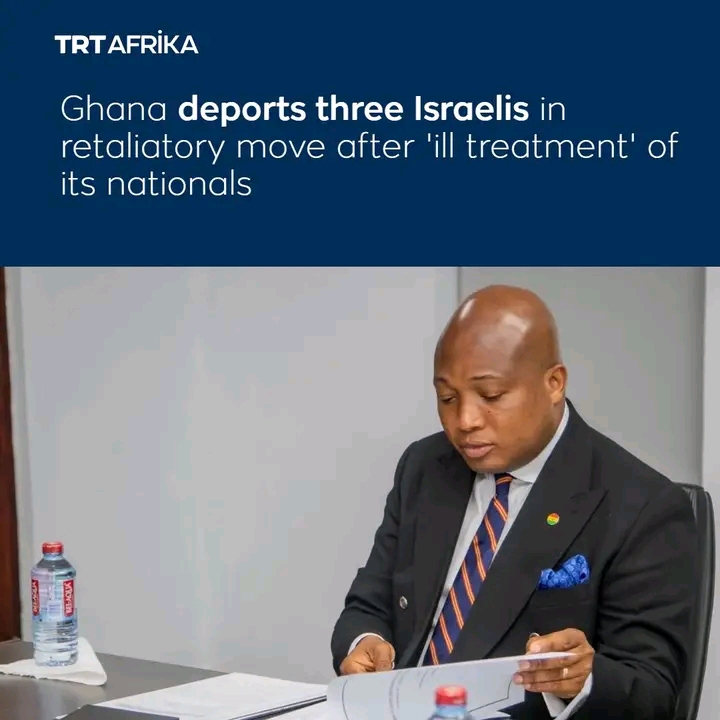
The government of Ghana has taken decisive diplomatic action following what it described as the unjust and inhumane treatment of several Ghanaian travellers by Israeli immigration officials at Ben Gurion International Airport. In a move that immediately drew widespread public attention across West Africa and beyond, Ghana deported three Israeli nationals who arrived in the country on Wednesday, framing the action as a necessary response to safeguard the dignity of its citizens.
In its official statement, the Ministry of Foreign Affairs and Regional Integration said the decision stemmed from the “ill treatment and unjustified deportation” of three Ghanaian nationals by Israeli authorities. According to the statement, Ghana’s action was a clear message that the nation “will continue to safeguard the dignity of its nationals and also that of other nationals” who enter its territory.
The ministry described the experiences of Ghanaian travellers at Ben Gurion Airport as “inhumane and traumatic,” adding that many had been subjected to harsh and deliberate scrutiny since Sunday. Among those affected were four members of Ghana’s parliamentary delegation who travelled to Tel Aviv to attend the Annual International Cybersecurity Conference. They were allegedly detained without clear justification and released only after more than five hours of what Ghana termed “strenuous diplomatic intervention.” Three other Ghanaian travellers were deported and have since returned safely to Accra.
Ghana announced later that it had agreed to work with Israel to resolve the matter amicably, though it emphasised that immediate corrective action was required to signal Ghana’s unwillingness to tolerate disrespect toward its citizens.
Public Reaction Across West Africa
The development sparked robust discussions across social media and regional platforms, where many praised Ghana for taking a firm and principled stance. Commentators argued that African countries must assert equal sovereignty in international relations and refuse to permit the mistreatment of their nationals abroad. Several expressed the view that Ghana’s swift action demonstrated national pride and diplomatic strength, contrasting it with what they perceived to be weaker responses from other African governments in similar situations.
Some observers noted that such an assertive reaction was partly influenced by the fact that the incident involved lawmakers, suggesting that if ordinary citizens had been affected, the response might have been slower. Nevertheless, they agreed that Ghana’s decision set an important precedent.
Others used the opportunity to discuss broader patterns of treatment faced by Africans in foreign countries, noting that respect on the world stage begins with how a nation defends its own citizens. “No country will value you if you do not value yourself,” one commentator wrote, capturing a sentiment widely echoed across discussions.
A separate line of debate focused on the longstanding tensions in the Middle East. While some participants criticised Israel’s security posture as excessively harsh, others argued that Israel tightened its border procedures after past conflicts and tends to apply strict scrutiny to visitors of all nationalities.
Additionally, users highlighted the broader geopolitical context, with some pointing out that many African nations maintain passive or inconsistent diplomatic reactions because of internal political weaknesses, corruption, or economic dependencies.
A Message of Sovereignty and Reciprocity
Despite the diverse commentary, the central theme emerging from the discussions was that Ghana’s response underscores the principle of reciprocity—a norm in international diplomacy. Many argued that when a nation retaliates proportionately in the face of disrespect, it communicates strength, self-respect, and sovereignty.
In the view of many observers, Ghana’s action, whether symbolic or strategic, sent a clear message: African states must insist on fair treatment for their citizens and will not remain passive when confronted with unjust behaviour on the global stage.





Responses