
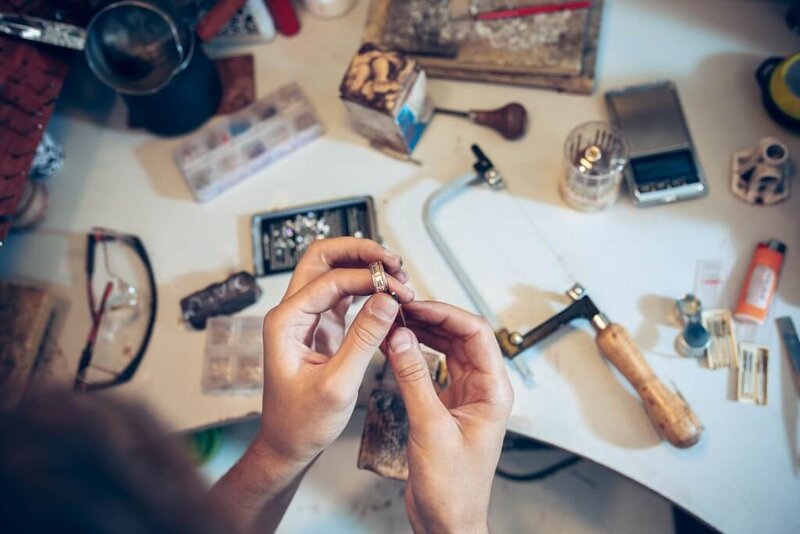
One of the first questions every aspiring jewellery maker asks is, “What tools do I really need to get started?” It’s a sensible question because the market is filled with hundreds of jewellery-making tools, equipment and accessories. For someone just starting, it can be difficult to know which ones are essential and which can wait until later.
The good news is that you don’t need to spend a fortune before making your first bracelet, necklace or pair of earrings. Many successful jewellery makers began with a small collection of basic jewellery tools and gradually upgraded as they gained experience and attracted more customers.
Whether you’re interested in beaded jewellery, wire jewellery, fashion accessories or eventually working with precious metals, using the right tools makes the learning process much easier. Good tools improve accuracy, reduce mistakes and help you produce jewellery that looks neat and professional.
This guide explains the essential jewellery making tools for beginners, what each tool is used for, when you should buy it, and how to avoid wasting money on equipment you don’t yet need. By the end of this article, you’ll have a clear understanding of what belongs in your beginner’s toolkit and how to build it step by step.
New to jewellery making? Before investing in tools and equipment, it’s a good idea to understand what the craft involves and the skills you’ll need to succeed. Read our comprehensive guide on How to Become a Jewellery Maker in Nigeria to learn about training options, apprenticeships, startup costs and the steps to building a successful jewellery-making career.
Table of Contents
- Do You Need Expensive Tools to Start?
- Essential Jewellery Making Tools for Beginners
- Jewellery Pliers Explained
- Wire Cutters
- Beading Tools
- Jewellery Hammer
- Measuring Tools
- Jewellery Files
- Jewellery Saw
- Jewellery Polishing Tools
- Jewellery Making Kits
- Larger Jewellery Making Equipment
- Other Helpful Accessories
- How Much Should Beginners Spend?
- Where to Buy Jewellery Supplies
- How to Care for Your Tools
- Common Mistakes Beginners Make
- Frequently Asked Questions
- Final Thoughts
Do You Need Expensive Tools to Start?
The simple answer is no.
Many beginners assume they need a professional workshop filled with specialised equipment before they can start making jewellery. That isn’t true.
In fact, buying too many tools too early is one of the biggest mistakes new jewellery makers make.
A small set of quality tools is usually enough to begin learning the basics. As your skills improve and you decide which type of jewellery you enjoy making most, you can gradually invest in more specialised equipment.
For example:
- If you’re making beaded jewellery, you’ll need only a handful of tools.
- Wire jewellery requires a few additional hand tools.
- Goldsmithing and silversmithing require more advanced equipment, but those tools are not necessary for complete beginners.
Think of your first toolkit as an investment in learning rather than buying everything available.
Instead of asking:
“What tools should I buy?”
Ask:
“What tools do I need for the type of jewellery I want to make?”
That simple mindset can save you a lot of money.
Essential Jewellery Making Tools for Beginners
If you’re completely new to jewellery making, these are the tools you should consider buying first.
| Tool | Essential for Beginners? | Buy Immediately? |
|---|---|---|
| Round nose pliers | ✅ Yes | Yes |
| Flat nose pliers | ✅ Yes | Yes |
| Chain nose pliers | ✅ Yes | Yes |
| Wire cutters | ✅ Yes | Yes |
| Bead board | ✅ Recommended | Soon |
| Measuring ruler | ✅ Yes | Yes |
| Jewellery files | ✅ Recommended | Soon |
| Polishing cloth | ✅ Yes | Yes |
| Tweezers | Optional | Later |
| Jewellery hammer | Optional | Later |
| Jewellery saw | No | Advanced stage |
| Rolling mill | No | Professional stage |
Starting with these essentials allows you to complete a wide range of beginner projects without spending on equipment you may not use immediately.
1. Jewellery Pliers
When people talk about basic jewellery tools, pliers are usually the first items mentioned—and for good reason.
Unlike ordinary household pliers, jewellery pliers are designed for delicate work. Their smooth jaws grip wire and metal without leaving deep scratches or damaging your materials.
There are three main types every beginner should know.
Round Nose Pliers
Round nose pliers have tapered, rounded jaws that are perfect for creating loops and curves.
You’ll use them to:
- Make wire loops
- Create decorative wire designs
- Shape eye pins
- Form jump rings
If you plan to make earrings or necklaces, you’ll use round nose pliers almost every day.
Beginner tip: Start with a medium-sized pair. Very small or very large pliers can be harder to control while learning.
Flat Nose Pliers
Flat nose pliers have wide, flat jaws that provide a strong grip.
They are useful for:
- Holding jewellery pieces firmly
- Flattening wire
- Straightening bends
- Opening and closing jump rings
- Bending sheet metal
Because the jaws are flat, they distribute pressure evenly across the surface.
Chain Nose Pliers
Chain nose pliers look similar to flat nose pliers but taper to a narrower point.
They allow you to work in tight spaces where larger pliers cannot reach.
They’re commonly used for:
- Opening jump rings
- Closing jewellery findings
- Holding tiny components
- Wire wrapping
- Precision adjustments
Most jewellery makers keep both flat nose and chain nose pliers on their workbench because each serves a different purpose.
Should You Buy All Three?
Yes.
These three pliers form the foundation of nearly every beginner’s jewellery toolkit. Buying a quality set from the start is usually more economical than purchasing them separately over time.
2. Wire Cutters
Wire cutters are another essential tool you shouldn’t replace with ordinary household cutters.
Although regular cutting pliers may seem similar, they often crush or deform jewellery wire, leaving rough edges that are difficult to work with.
Good wire cutters are designed to produce cleaner cuts with less damage to the material.
You’ll use them to cut:
- Jewellery wire
- Eye pins
- Head pins
- Memory wire (using appropriate heavy-duty cutters)
- Small chains
- Soft craft wire
Some cutters produce a flush cut, leaving one side smooth and reducing the amount of filing required afterwards.
Beginner Tip
Don’t use your jewellery wire cutters on thick steel wire or hard materials unless they’re designed for heavy-duty work. Doing so can damage the cutting edges and shorten the life of your tool.
3. Beading Tools
If your goal is to make bracelets, necklaces or earrings with beads, you’ll need a few specialised beading tools alongside your pliers and cutters.
The most useful ones include:
Beading Needle
A thin, flexible needle used to thread tiny beads that ordinary sewing needles cannot easily handle.
Bead Board
A bead board helps you arrange beads before stringing them together. It allows you to experiment with different patterns, colour combinations and necklace lengths without permanently assembling the design.
Using a bead board reduces mistakes and makes it easier to visualise the finished piece before you begin.
Bead Scoop
A bead scoop helps collect small beads quickly, reducing spills and saving time during projects.
Beading Thread
Different jewellery designs require different types of thread, such as nylon thread, elastic cord or beading wire. Choosing the right one depends on the style and intended use of the jewellery.
4. Jewellery Hammer
A jewellery hammer is designed for shaping, flattening and texturing metal without causing unnecessary damage. Although it looks similar to an ordinary hammer, it is made specifically for jewellery work.
Depending on the type of jewellery you plan to make, a hammer can help you:
- Flatten wire
- Harden wire after shaping
- Create decorative textures
- Shape metal components
- Adjust jewellery pieces without excessive force
There are several types of jewellery hammers, including:
Ball Pein Hammer
One side is flat, while the other has a rounded end. It’s commonly used for shaping metal and creating subtle textures.
Chasing Hammer
This has a wide, flat head and is popular among metal jewellery makers because it distributes force evenly.
Rawhide or Nylon Hammer
This hammer is ideal for beginners because it shapes metal without leaving visible marks or dents.
Should Beginners Buy One?
If you’re focusing on beaded jewellery, you probably won’t need a hammer immediately.
However, if you’re interested in wire jewellery or metalworking, adding a nylon or rawhide hammer to your toolkit is a good investment.
5. Measuring Tools
Accurate measurements can make the difference between jewellery that fits comfortably and jewellery that customers return because it’s too loose or too tight.
Fortunately, measuring tools are affordable and easy to use.
Metal Ruler
A ruler helps you measure:
- Chain length
- Bracelet size
- Wire length
- Pendant placement
A stainless steel ruler is usually more durable than plastic alternatives.
Ring Sizer
If you plan to make or sell rings, a ring sizer is essential.
It allows you to determine customers’ ring sizes accurately and reduces costly sizing mistakes.
Digital Calipers
Digital calipers measure tiny objects with much greater accuracy than a ruler.
They’re useful for measuring:
- Bead diameter
- Wire thickness
- Gemstones
- Jump rings
- Small metal components
Although calipers aren’t essential on day one, they become increasingly valuable as your jewellery designs become more detailed.
Measuring Tape
A flexible measuring tape is useful when measuring wrists, necks and ankles for custom jewellery.
Offering custom sizing can improve customer satisfaction and reduce returns.
6. Jewellery Files
After cutting wire or shaping metal, rough edges are almost unavoidable.
Jewellery files help smooth these edges, making finished pieces safer and more comfortable to wear.
They’re particularly useful for:
- Removing sharp edges
- Smoothing wire ends
- Refining metal surfaces
- Preparing jewellery before polishing
Common types include:
- Flat files
- Half-round files
- Needle files
- Round files
For beginners, a small needle file set usually provides enough variety for most projects.
Why This Tool Matters
Skipping this step can leave rough edges that may scratch customers or snag clothing. Even a simple bracelet looks more professional when properly finished.
7. Jewellery Saw
A jewellery saw is mainly used for cutting sheet metal and creating intricate shapes.
Unlike ordinary hacksaws, jewellery saws use very fine blades that allow for detailed, precise cuts.
You’ll typically use one for:
- Cutting silver sheets
- Cutting brass
- Creating pendants
- Intricate decorative designs
- Custom jewellery components
Do Beginners Need One?
Not necessarily.
If you’re making:
- Beaded jewellery
- Wire jewellery
- Fashion accessories
you can safely postpone buying a jewellery saw.
It’s more appropriate for jewellers who intend to work with precious metals or fabricate custom pieces from sheet metal.
Instead of buying one immediately, focus on mastering simpler techniques first.
8. Jewellery Polishing Tools
Making jewellery isn’t only about assembling components. The finishing process is equally important.
Even beautifully designed jewellery can appear unprofessional if it’s dull or covered in fingerprints.
That’s where jewellery polishing tools come in.
Polishing Cloth
This is one of the first polishing tools every beginner should buy.
It removes:
- Fingerprints
- Dust
- Light tarnish
- Small marks
A polishing cloth is inexpensive and lasts a long time when properly maintained.
Polishing Compound
Polishing compounds help restore shine to metal surfaces.
Different compounds are made for different metals, so always choose one suitable for the materials you’re using.
Buffing Wheel
A buffing wheel is attached to a rotary tool or polishing machine.
It provides a faster, smoother finish than hand polishing.
Although useful, it’s not essential for beginners making small quantities of jewellery.
Rotary Tool
A rotary tool can perform several tasks, including:
- Sanding
- Polishing
- Engraving
- Drilling
- Buffing
Many jewellery makers purchase one after gaining more experience because of its versatility.
Beginner Advice
Start with a polishing cloth.
Upgrade to powered polishing equipment later when your production increases.
9. Jewellery Making Kit
Many beginners choose to buy a jewellery making kit instead of purchasing tools individually.
These kits usually contain:
- Pliers
- Wire cutters
- Jump rings
- Clasps
- Beads
- Jewellery wire
- Crimp beads
- Thread
- Storage box
Some larger kits also include beginner instruction manuals.
Advantages
✔ Everything is packaged together.
✔ Usually costs less than buying each item separately.
✔ Ideal for learning basic techniques.
✔ Saves shopping time.
✔ Convenient for beginners who don’t know where to start.
Limitations
Not every tool included is high quality.
Some kits contain tools you’ll rarely use.
Bead quality can vary considerably.
You may eventually replace several items with professional-grade versions.
Should Beginners Buy One?
Yes ! provided you choose a kit from a reputable supplier.
A starter kit offers excellent value and allows you to begin practising immediately without worrying about missing essential items.
10. Larger Jewellery Making Equipment
When people search for jewellery making equipment, they often see expensive machines used in professional workshops.
These include:
- Rolling mills
- Casting machines
- Kilns
- Wax injectors
- Laser welders
- Ultrasonic cleaners
- Hydraulic presses
- Metal melting furnaces
While these machines are impressive, they’re designed for experienced jewellers or commercial workshops—not beginners.
Should You Buy Professional Equipment?
For most beginners, the answer is no.
Buying expensive equipment too early often ties up money that could be better spent on:
- Training
- Better hand tools
- Quality materials
- Marketing
- Packaging
- Building your portfolio
As your skills grow and customer demand increases, you’ll naturally identify which specialised equipment is worth investing in.
Other Helpful Tools Every Beginner Should Consider
Although not absolutely essential, these accessories can make your workspace safer, more organised and more efficient.
Tweezers
Useful for handling tiny jump rings, gemstones and delicate findings.
Magnifying Glass
Makes it easier to inspect fine details and identify small imperfections.
Jewellery Glue
Helpful for projects involving cabochons, crystals or decorative embellishments.
Always choose glue specifically designed for jewellery rather than ordinary household adhesives.
Storage Boxes
Keeping beads, findings and tools organised saves time and prevents loss.
Transparent compartment boxes are especially useful because you can easily see what’s inside.
Jewellery Workbench
You don’t need a dedicated workshop to begin.
A sturdy desk with good lighting is sufficient for most beginners.
As your business grows, you can invest in a proper jewellery workbench with built-in storage and specialised features.
Safety Glasses
Eye protection is often overlooked, especially when cutting wire or polishing metal.
A simple pair of safety glasses can prevent serious eye injuries.
Protective Apron
An apron protects your clothing and provides convenient pockets for small tools while you work.
Beginner Buying Priority
To help you spend wisely, here’s a simple priority guide:
| Priority | Tools |
|---|---|
| Buy First | Round nose pliers, chain nose pliers, flat nose pliers, wire cutters, ruler, polishing cloth, bead board |
| Buy Next | Jewellery files, ring sizer, tweezers, storage box, measuring tape, jewellery hammer |
| Buy Later | Rotary tool, buffing wheel, jewellery saw, digital calipers |
| Professional Stage | Rolling mill, casting machine, ultrasonic cleaner, laser welder, polishing motor |
This approach allows you to start creating quality jewellery without overspending or filling your workspace with equipment you won’t use immediately.
How Much Should Beginners Spend on Jewellery Making Tools?
One of the biggest mistakes beginners make is trying to buy everything at once.
It’s easy to get excited after watching jewellery-making videos online, but purchasing every tool you see can quickly exhaust your budget.
Instead, think of your toolkit as something that grows with your skills.
A practical way to budget is to divide your purchases into three stages.
Budget Starter Kit
This is ideal if you’re learning as a hobby or testing whether jewellery making is the right path for you.
Your budget should focus on essentials such as:
- Round nose pliers
- Flat nose pliers
- Chain nose pliers
- Wire cutters
- Beading board
- Jewellery wire
- Beads
- Jump rings
- Clasps
- Polishing cloth
- Storage container
At this stage, there’s no need to buy expensive machinery or specialist equipment.
Mid-Level Toolkit
Once you’ve completed several projects and started receiving orders, you can gradually add tools that improve speed and precision.
Examples include:
- Jewellery hammer
- Needle file set
- Ring sizer
- Digital calipers
- Rotary tool
- Better-quality pliers
- Larger storage organisers
- Professional measuring tools
These upgrades make your work more efficient and improve the overall finish of your jewellery.
Professional Toolkit
Only after you’ve built experience and a steady customer base should you consider investing in advanced equipment.
Professional jewellers may eventually purchase:
- Rolling mills
- Casting machines
- Ultrasonic cleaners
- Polishing motors
- Soldering equipment
- Laser welders
- Engraving tools
These machines are expensive and usually unnecessary for beginners.
Remember that customers buy beautiful jewellery—not expensive equipment.
Quality Is Better Than Quantity
When shopping for tools, avoid buying the cheapest option simply because it costs less.
Low-quality tools often:
- Break easily
- Lose alignment
- Rust quickly
- Become uncomfortable to hold
- Produce inaccurate results
Instead, buy fewer tools of reasonable quality.
A durable pair of jewellery pliers can last for years if properly maintained.
Where to Buy Jewellery Making Tools
Finding reliable suppliers is almost as important as choosing the right tools.
Poor-quality equipment can make learning frustrating and reduce the quality of your finished products.
Fortunately, there are several places where beginners can buy jewellery tools and supplies.
Local Craft and Jewellery Supply Shops
Many major Nigerian cities have craft markets and jewellery supply stores that stock basic equipment.
Buying locally has several advantages.
You can:
- Inspect the tools before paying
- Compare different brands
- Ask questions
- Avoid delivery delays
If you’re fortunate enough to have a local supplier nearby, visiting the shop can help you understand the differences between various tools before making a purchase.
Online Marketplaces
Online shopping has made jewellery supplies much easier to access.
Many beginners order:
- Jewellery pliers
- Wire
- Beads
- Findings
- Storage boxes
- Tool kits
from trusted online sellers.
Before ordering, always check:
- Customer reviews
- Seller ratings
- Product photos
- Return policy
- Delivery timeline
Reading genuine customer feedback can help you avoid poor-quality products.
Wholesale Markets
If you already have customers or plan to produce jewellery in larger quantities, wholesale markets may offer better value.
Buying in bulk often reduces the cost of:
- Beads
- Jewellery wire
- Jump rings
- Clasps
- Chains
- Packaging materials
However, beginners should avoid buying excessive quantities until they understand which materials they use most frequently.
Direct Manufacturers
Some experienced jewellery makers eventually buy directly from manufacturers or importers.
This usually provides:
- Better prices
- Wider product selection
- Consistent quality
For beginners, however, local suppliers or reputable online retailers are usually the more practical choice.
How to Choose a Reliable Supplier
Not every seller offers the same quality.
Before buying, consider these questions.
Are the tools specifically designed for jewellery making?
Household tools may look similar, but specialised jewellery tools usually provide greater precision.
Do other buyers recommend the seller?
Positive reviews from experienced jewellery makers can save you from making expensive mistakes.
Are replacement parts available?
Certain tools eventually wear out.
Buying from suppliers that stock replacement parts can save money in the long run.
Is the tool comfortable to hold?
You’ll spend hours using your tools.
Comfortable handles reduce hand fatigue and improve accuracy.
How to Care for Your Jewellery Making Tools
Even the best tools need regular maintenance.
Proper care extends their lifespan and keeps them working efficiently.
Fortunately, maintaining jewellery tools isn’t difficult.
Clean Tools After Every Session
Dust, polishing compounds and tiny metal particles can build up surprisingly quickly.
At the end of each project:
- Wipe tools with a clean cloth.
- Remove dirt from moving parts.
- Check for loose screws.
This simple habit helps prevent premature wear.
Keep Tools Dry
Moisture is one of the biggest causes of rust.
Avoid leaving tools in damp environments.
If your workspace becomes humid, consider placing silica gel packets inside your toolbox to reduce moisture.
Store Tools Properly
Throwing tools into one container can damage delicate edges.
Instead:
- Use storage compartments.
- Hang frequently used tools.
- Separate sharp tools.
- Protect cutting edges.
An organised workspace also helps you work more efficiently.
Lubricate Moving Parts
Pliers and cutters contain joints that benefit from occasional lubrication.
A tiny amount of machine oil keeps them operating smoothly.
Be careful not to apply excessive oil, as this can attract dust.
Sharpen or Replace Worn Tools
Wire cutters eventually become dull.
Files lose effectiveness after extended use.
Trying to continue with damaged tools often produces poor-quality work.
Replacing worn tools is usually more economical than struggling with inaccurate equipment.
Safety Tips Every Beginner Should Follow
Jewellery making may seem harmless, but accidents can happen if you’re careless.
Protect yourself by following a few basic safety practices.
Wear Eye Protection
Wire can spring unexpectedly while cutting.
Safety glasses help protect your eyes from flying pieces.
Work in Good Lighting
Proper lighting reduces mistakes and eye strain.
Natural light is ideal whenever possible.
Keep Your Workspace Organised
A cluttered workspace increases the likelihood of:
- Losing small parts
- Damaging jewellery
- Injuring yourself
Developing tidy work habits from the beginning makes every project easier.
Use the Right Tool for the Job
Avoid using wire cutters as pliers or pliers as hammers.
Using tools incorrectly often damages both the tool and your jewellery.
Take Breaks
Long jewellery-making sessions can strain your hands and wrists.
Short breaks improve concentration and reduce fatigue.
Budgeting Tips for Beginners
If your budget is limited, consider the following strategy.
Month One
Buy only the essentials.
Focus on learning.
Month Two
Upgrade the tools you use most often.
Month Three
Invest in better materials.
Higher-quality beads and findings often make a bigger difference than buying additional tools.
Month Four and Beyond
Expand your toolkit based on customer demand rather than impulse purchases.
This gradual approach keeps your spending under control while ensuring every purchase adds value to your business.
Internal Linking Opportunity
If you’re still learning the craft itself, don’t miss our How to Become a Jewellery Maker in Nigeria guide. It explains how to choose a training programme, develop practical skills, find apprenticeships and turn your creativity into a profitable jewellery business.
If your goal is to earn from your craft, you may also enjoy our upcoming guide on How to Start a Jewellery Business in Nigeria, where we’ll cover branding, pricing, marketing and finding customers.
How Much Should Beginners Spend on Jewellery Making Tools?
One of the biggest mistakes beginners make is believing they need a fully equipped workshop before making their first bracelet or necklace. That isn’t true.
The amount you spend should depend on the type of jewellery you want to make, your budget and whether you’re learning as a hobby or planning to start a business.
Here’s a general guide.
| Budget Level | What You Can Buy | Best For |
|---|---|---|
| Entry Level | Basic pliers, wire cutters, beads, wires, jump rings, measuring tape, bead mat | Complete beginners |
| Mid-Range | Better-quality tools, bead board, jewellery hammer, polishing cloth, storage organisers | Serious learners |
| Professional | Premium pliers, rotary tools, soldering equipment, rolling mill, workbench, polishing machine | Full-time jewellery makers |
The smartest approach is to buy only the tools you need today. As your skills improve and you begin selling your work, you can gradually invest in more advanced equipment.
Where Can You Buy Jewellery Making Tools?
Finding reliable jewellery supplies can be challenging when you’re just starting. Fortunately, there are several options available in Nigeria and internationally.
Local Craft and Jewellery Supply Shops
Many major cities have craft stores or jewellery supply shops where you can inspect tools before buying. This is helpful if you want to compare quality.
Wholesale Markets
Some wholesale markets stock beads, jewellery findings, wires and basic tools at lower prices. Buying in bulk can reduce costs if you already have regular customers.
Online Marketplaces
Many beginners purchase tools online because there is a wider selection.
When buying online:
- Read customer reviews carefully.
- Compare prices from multiple sellers.
- Check product specifications.
- Confirm delivery costs before ordering.
- Buy from reputable sellers with positive ratings.
Direct Manufacturers and Suppliers
If you eventually expand your jewellery business, buying directly from manufacturers or authorised distributors may help reduce costs and ensure consistent quality.
Availability varies by city, so compare several suppliers before making a purchase.
How to Take Care of Your Jewellery Making Tools
Good tools can last for many years if you maintain them properly. Even affordable tools will perform better when they are cleaned and stored correctly.
Clean Your Tools Regularly
Dust, polishing compounds and metal particles can build up over time.
After each project:
- Wipe pliers with a soft cloth.
- Remove glue residue immediately.
- Brush away metal filings.
- Clean bead boards and work surfaces.
Store Them Properly
Avoid throwing all your tools into one box.
Instead:
- Keep pliers together.
- Store files separately.
- Organise beads by colour or size.
- Use storage containers with compartments.
- Protect sharp tools with covers where possible.
Good organisation saves time and reduces damage.
Prevent Rust
Metal tools can rust when exposed to moisture.
To reduce this risk:
- Store tools in a dry place.
- Keep them away from damp environments.
- Wipe them dry after cleaning.
- Consider using silica gel packets inside storage boxes.
Replace Worn Tools
Even quality tools eventually wear out.
Replace tools if you notice:
- Loose joints
- Blunt cutting edges
- Bent jaws
- Cracked handles
- Excessive rust
Working with damaged tools can affect the quality of your jewellery and may even cause injuries.
Common Mistakes Beginners Make
Most jewellery makers make mistakes when they start. Learning from them can save you money and frustration.
1. Buying Expensive Equipment Too Early
Many beginners purchase advanced machines before mastering basic techniques.
Start with simple tools first.
2. Choosing the Cheapest Tools Available
Very cheap tools often:
- break easily
- become loose quickly
- cut poorly
- damage jewellery materials
Aim for good quality within your budget instead of the absolute cheapest option.
3. Ignoring Safety
Jewellery making involves sharp tools and small components.
Always:
- wear safety glasses when appropriate
- keep sharp tools away from children
- work in a well-lit space
- avoid distractions when cutting wire
4. Using the Wrong Tool
Trying to replace jewellery pliers with household pliers often damages delicate materials.
Each jewellery tool has a specific purpose.
5. Poor Tool Storage
Leaving tools scattered on a table can lead to:
- rust
- lost items
- damaged cutting edges
- wasted time
Organise your workspace from the beginning.
6. Skipping Maintenance
Even the best tools need occasional cleaning and inspection.
Ignoring maintenance can shorten their lifespan significantly.
7. Buying Every Tool at Once
It is tempting to buy everything you see online.
However, many tools may remain unused for months.
Build your toolkit gradually as your skills develop.
Building Your Jewellery Toolkit in Stages
A practical way to grow is to purchase tools in phases.
Stage One: Absolute Essentials
Start with:
- Round nose pliers
- Flat nose pliers
- Chain nose pliers
- Wire cutters
- Measuring ruler
- Bead mat
- Beads
- Jewellery wire
- Jump rings
- Clasps
These are enough for many beginner projects.
Stage Two: Intermediate Tools
Once you’re comfortable, add:
- Jewellery hammer
- Files
- Ring sizer
- Calipers
- Polishing cloth
- Bead board
- Storage organisers
Stage Three: Professional Equipment
As your business grows, consider investing in:
- Rotary polishing tools
- Soldering equipment
- Bench vise
- Workbench
- Rolling mill
- Casting equipment
- Ultrasonic cleaner
By this stage, your purchases should be driven by customer demand rather than curiosity.
Frequently Asked Questions
What jewellery making tools do beginners need first?
Most beginners should start with round nose pliers, chain nose pliers, flat nose pliers, wire cutters, measuring tools, jewellery wire, beads, jump rings and clasps.
Can I start with a jewellery making kit?
Yes. A jewellery making kit is often one of the easiest ways to begin because it includes many essential tools and materials in one package.
What’s the difference between round nose, flat nose and chain nose pliers?
Round nose pliers create loops and curves.
Flat nose pliers grip flat surfaces securely.
Chain nose pliers provide greater precision in tight spaces and are useful for opening jump rings and handling small findings.
Do I need a jewellery polishing machine?
Not at the beginning.
A polishing cloth is usually enough for most beginner projects. Machines become useful as your production increases.
Can I make jewellery from home?
Yes.
Many successful jewellery businesses started from a spare room, small workshop or even a dining table before expanding.
Is an expensive workbench necessary?
No.
A sturdy table with good lighting is enough when you’re learning.
How long do jewellery tools last?
Quality tools can last for many years when properly maintained.
Can ordinary household pliers replace jewellery pliers?
Not recommended.
Household pliers are usually too large and can scratch delicate jewellery materials.
Should I buy tools individually or as a kit?
If you’re completely new, a kit offers better value. As you gain experience, you can replace individual tools with higher-quality versions.
Which tool usually wears out first?
Wire cutters often wear out faster because they are used frequently and experience significant pressure during cutting.
Where can I buy jewellery making supplies?
You can buy supplies from craft stores, jewellery supply shops, wholesale markets, reputable online marketplaces and authorised suppliers. Compare quality, reviews and prices before purchasing.
Can I start jewellery making on a small budget?
Yes. Many beginners start with a modest investment by focusing on the essential tools needed for beaded or wire jewellery.
Conclusion
Buying jewellery making tools is exciting, but remember that your success depends far more on your creativity, consistency and willingness to practise than on owning the most expensive equipment.
Start with the basics. Learn how each tool works before moving on to advanced equipment. As your confidence grows, upgrade your toolkit based on the type of jewellery you enjoy making and the needs of your customers.
Whether your goal is to create handmade accessories for friends or build a profitable jewellery business, investing in the right tools at the right time will make your learning journey easier and more enjoyable.
If you’re still learning the craft, don’t stop here. Read our How to Become a Jewellery Maker in Nigeria guide for a complete roadmap, then explore our upcoming articles on jewellery business ideas, common beginner mistakes and practical jewellery-making skills.
Finally, bookmark Zoeeb for more beginner-friendly guides, training resources and business tips to help you build valuable skills and grow a successful creative career.
???? Stay Empowered with ZOEEB
Join our community for daily updates on jobs, skills, and financial growth opportunities.