Muiz Banire Claims Police Made a Mistake in Charging Minors to Court Over Alleged Treason


A former National Legal Adviser of the All Progressives Congress (APC), Dr. Muiz Banire, has weighed in on the ongoing case involving minors who were recently charged with treason. Banire, a respected legal expert, stated that the police made a significant mistake in charging the minors to court in connection with the alleged plot to overthrow the government.
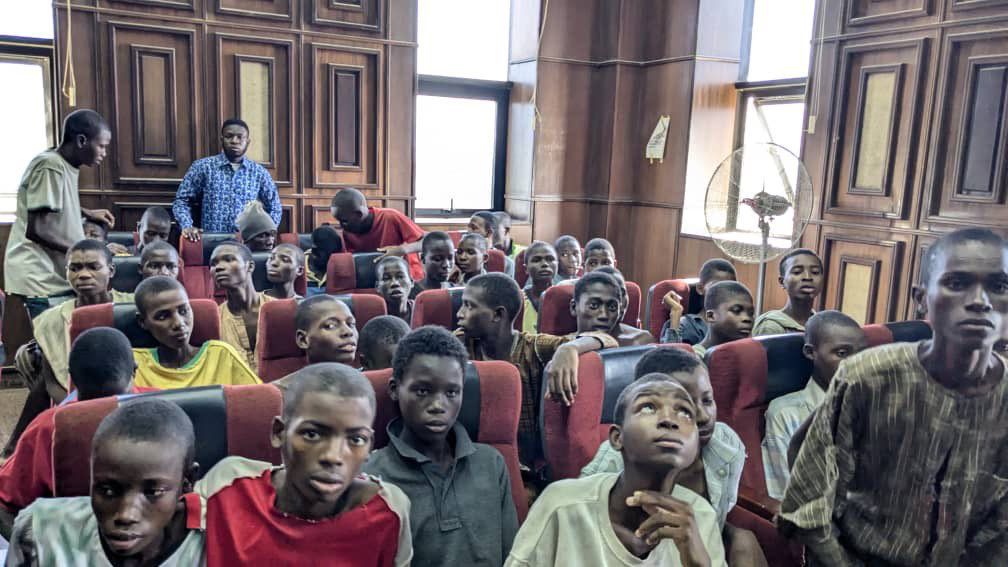
The minors, who are reportedly between the ages of 12 and 15, were arrested by the police after they were accused of being involved in an alleged treasonous conspiracy. The charges stemmed from an investigation into a group believed to be plotting an attack against the Nigerian government. The police, following the arrests, charged the minors in a manner that raised eyebrows among legal practitioners and human rights advocates.
Dr. Muiz Banire, in a statement issued on Thursday, emphasized that charging minors with such a serious offense as treason was not only legally wrong but also a violation of basic principles of justice. He stressed that minors, due to their age and developmental stage, should not be subjected to the same legal processes as adults, especially in cases involving such grave accusations. He described the action taken by the police as “misguided” and pointed out that the legal framework surrounding the treatment of minors in criminal cases had been clearly defined in Nigerian law.
Banire pointed out that under Nigerian law, minors who commit offenses are supposed to be tried in juvenile courts and not subjected to the usual adult court procedures. The charge of treason, which is considered one of the most severe criminal offenses in the country, carries significant consequences. Treason typically involves an attempt to overthrow the government or incite rebellion, and it is punishable by death or life imprisonment under Nigerian law. Banire’s legal argument is rooted in the fact that such a charge is unsuitable for individuals so young, especially when there are concerns about the minors’ capacity to understand the gravity of the accusations.
Banire also referenced international human rights conventions and laws, including the United Nations Convention on the Rights of the Child, which Nigeria has ratified. According to Banire, these international agreements mandate that children should be treated in a way that recognizes their age, maturity, and potential for rehabilitation. He argued that charging minors with a crime as severe as treason could have long-lasting negative effects on their psychological well-being and future prospects.
The police had initially claimed that the minors were part of a wider plot involving adult members of a radical group, though details of the alleged conspiracy have not been fully disclosed. Authorities were quick to stress that the minors were suspected of having been indoctrinated by the adults in the group and were allegedly used in an attempt to incite violence or disrupt national security. Despite the gravity of the accusations, there has been no substantial evidence made public linking the minors directly to any terrorist activity or rebellion.
The case has stirred significant public debate, with many Nigerians questioning the legality and appropriateness of charging minors in this context. Legal experts have raised concerns about the handling of juvenile cases in the country, with some arguing that the justice system is not adequately equipped to deal with young offenders, particularly in high-profile cases involving terrorism or treason.
Human rights groups have also weighed in, calling for the immediate release of the minors and for the charges against them to be dropped. They have stressed the need for a more rehabilitative approach to dealing with children involved in criminal activities, rather than punitive measures that could harm their futures.
In response to the controversy, the police have promised to review the case and consider the legal implications of the charges. However, Banire’s call for a reassessment of the minors’ treatment is gaining traction, as both legal experts and human rights activists continue to call for a more child-sensitive approach in the justice system.
Dr. Banire’s statement adds to the growing pressure on the police and the Nigerian government to ensure that justice is served in a way that aligns with the rights and well-being of the children involved. While the case is still under investigation, the legal community is calling for a more careful consideration of how the law should apply to minors, particularly in cases involving allegations of serious offenses like treason.




Responses