NDLEA Nets Over N139 Million from Property Auction as Part of Crackdown on Drug Crime

In a bold step toward dismantling the financial empires built through illicit drug trade, the National Drug Law Enforcement Agency (NDLEA) recently auctioned off eight properties connected to convicted drug traffickers. These properties, located across Lagos, Kano, Ondo, and Ogun states, had been forfeited to the government as part of the agency’s ongoing effort to hit drug offenders where it hurts most — their pockets.
The public auction was held at the NDLEA’s national headquarters in Abuja. While only two of the eight properties up for sale found new owners during the event, the agency still raised over N139 million from successful bids that exceeded their set reserve prices.
The NDLEA’s spokesperson, Femi Babafemi, who serves as the Director of Media and Advocacy, emphasized in a statement that the auction process was carried out with full transparency and in strict adherence to due process. According to him, the event was a public affair, drawing the presence of pre-qualified auctioneers, interested bidders, members of civil society organizations, media personnel, and representatives from various government bodies.
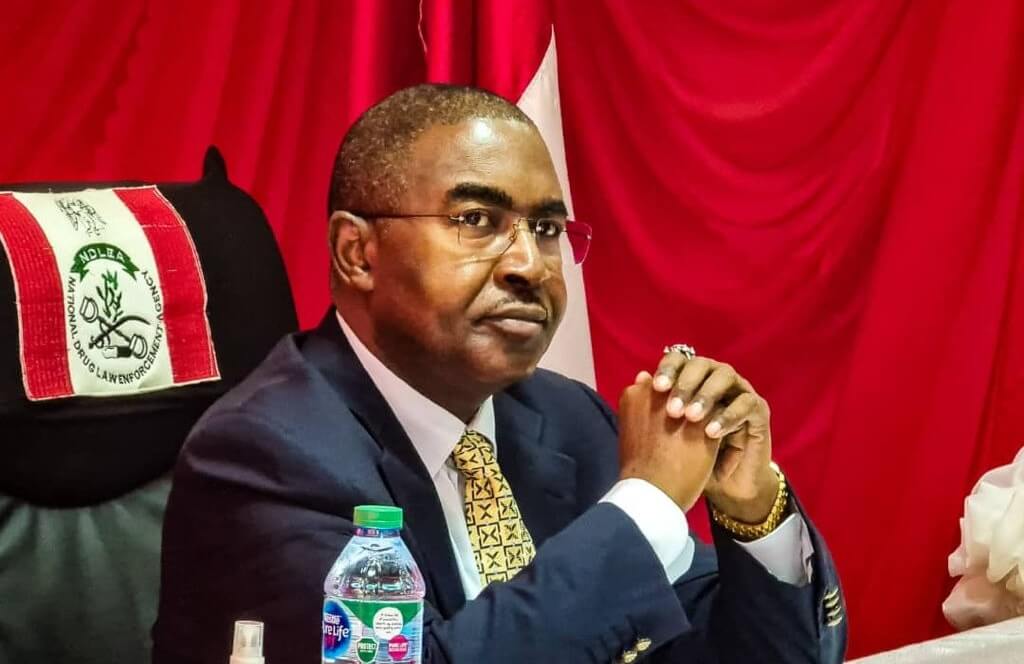
This auction is not just about selling off houses. It is part of a much broader strategy. NDLEA Chairman and Chief Executive Officer, Brigadier General Mohamed Buba Marwa (Retired), who was represented at the event by Mr. Shadrack Haruna, the Secretary of the Agency, highlighted the deeper purpose behind the exercise. Marwa explained that one of the most effective ways to combat drug trafficking is to cut off the financial rewards that motivate criminals to get involved in the first place. And for many of these offenders, that means seizing and selling off the assets they have acquired through the drug trade.
He reiterated the agency’s commitment to ensuring that drug traffickers not only face legal prosecution but also lose all the material benefits they have gained through illegal activity. This, he explained, is essential to truly dismantling drug networks across the country.
Among the properties listed for auction were eight houses located in Lagos, Kano, Ondo, and Ogun. However, two of the houses, one in Lekki and another in Ikorodu, both upscale areas in Lagos, were withdrawn from the auction due to pending appeals received after the auction process had already begun.
That left six properties on the table. While only two of them were successfully sold during the auction, those two generated more than N139 million, a substantial amount especially considering the conservative reserve prices placed on the properties. The remaining four properties either received no offers or attracted bids below the minimum acceptable amount.
Speaking on the significance of this outcome, Marwa stated that beyond locking up drug offenders, what truly sends a strong message is stripping them of their wealth. When people know that they stand to lose everything they have gained through drug crimes, not just their freedom but their homes, their cars, their land, it serves as a more powerful deterrent than jail time alone.
The NDLEA’s approach clearly goes beyond mere punishment. It is about setting an example and reducing the appeal of the drug trade. If the risk of losing everything is high, fewer people may be tempted to walk that path in the first place.
Umar Yakubu, a representative from the Centre for Transparency and Integrity Watch, was also present at the auction. He praised the NDLEA for its openness, noting that the process was not only credible and compliant with Nigerian laws but also aligned with international best practices. Yakubu urged the agency to go even further by using such public processes as an opportunity for civic education. According to him, when citizens see that drug crimes come with real and visible consequences, like losing multimillion-naira homes, it reinforces public trust in the system and serves as a clear warning to would-be offenders.
The NDLEA’s internal processes for managing forfeited assets also came under the spotlight during the event. Jerry Iorwa Aernan, who heads the Proceeds of Crime Management department at the agency, explained that only auctioneers who had been vetted and approved by the Bureau of Public Procurement were allowed to participate. This vetting was designed to prevent the risk of assets being quietly returned to their original owners or mismanaged during the disposal process.
Aernan went further to explain the auction terms. All successful bidders are required to make an initial payment of 10 percent of their bid value within 14 days. The full payment must then be completed within a set time frame to finalize the acquisition. This structured process ensures that only serious and credible buyers are part of the final transactions.
While only two properties were sold at this auction, the exercise itself is seen as a significant step forward. It shows that the NDLEA is not only focusing on arresting traffickers but is also deeply committed to dismantling the economic structures that support and reward illegal drug activity. By taking control of and selling off assets gained through crime, the agency is turning the tables on traffickers and sending a clear message that crime does not pay.
As Nigeria continues its battle against the drug epidemic and its ripple effects on society, these kinds of visible, transparent actions help restore public faith in institutions. They demonstrate that the law can be both just and effective, not just in punishing criminals but in reclaiming what was taken unlawfully and redirecting it toward national development.
The NDLEA has promised to continue these efforts and hinted that more auctions may follow as court processes conclude on other forfeiture cases. For now, the message from Abuja is clear. There is no safe haven for those who profit from the pain of others. Whether through prison sentences or asset seizures, justice will be served.


Responses