NDLEA’s 54-Month Fight Against Drugs: Over 67,000 Arrests and 11.2 Million Kilogrammes Seized

Over the past four and a half years, Nigeria’s war on drugs has been anything but quiet. The National Drug Law Enforcement Agency (NDLEA) has been leading a tough, consistent campaign against illicit drug use and trafficking — and the results are eye-opening.
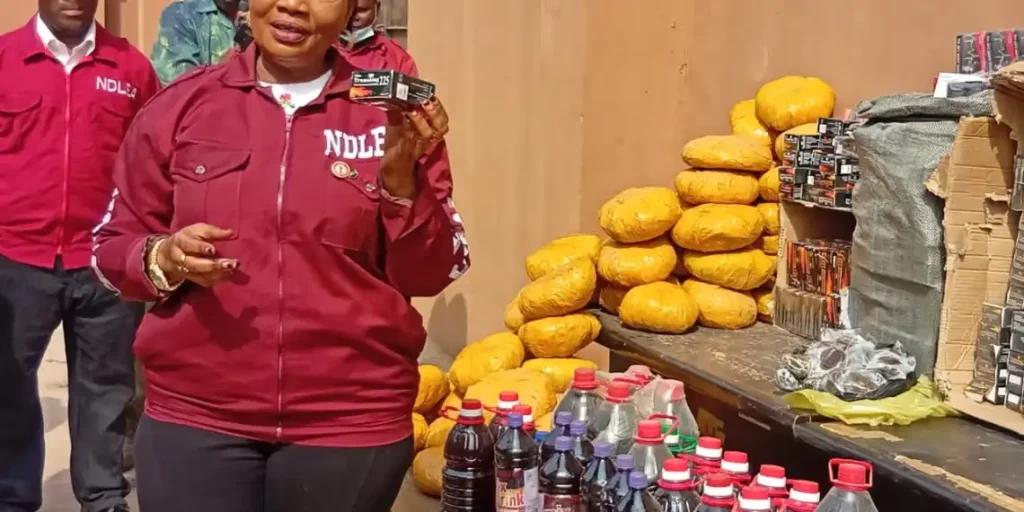
According to the NDLEA, more than 11.2 million kilogrammes of assorted illegal drugs have been seized across the country in just 54 months. That’s equivalent to over 11,000 metric tons — a staggering amount by any standard. But the agency hasn’t stopped at seizures. It also destroyed over 1,572 hectares of cannabis farms, especially in regions where illegal cultivation had taken root, particularly in the South-West.
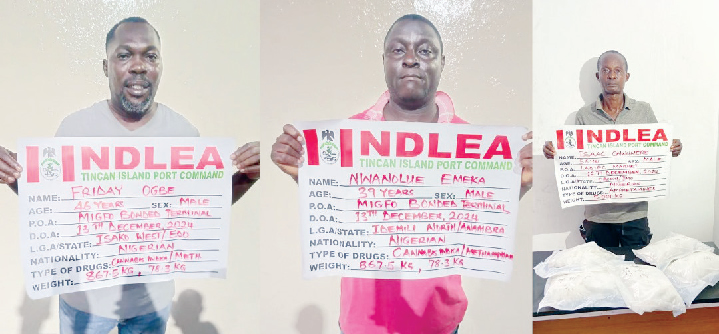
In that same period, a total of 67,345 suspects have been arrested. Among them are 95 drug barons — high-level traffickers who, in many cases, were well known in their communities and influential in business, politics, and society.
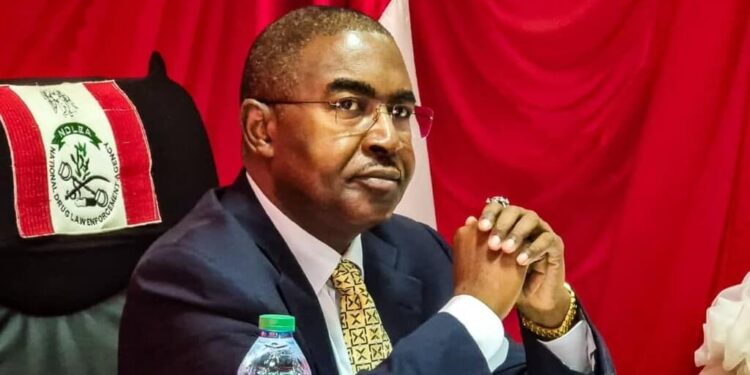
These numbers were made public by NDLEA Chairman, Brigadier General Buba Marwa (rtd.), during a seminar in Ijebu-Ode, Ogun State. The event was organized by the Ijebu-Ode Council of Olorituns and drew attention to the depth of the drug crisis and the agency’s multi-pronged strategy to fight it.
Speaking at the seminar, Marwa shared that the NDLEA’s efforts are not confined to certain regions or cities. Their campaign is national, involving regular raids, surveillance, arrests, and community outreach.
“In the past 54 months, we have arrested over 67,000 drug traffickers, including 95 barons. These barons are not strangers — they are known faces. Many are businesspeople, socialites, traditional titleholders, and even individuals connected to law enforcement. That tells you how far the problem has spread into our social fabric,” Marwa stated.
These comments point to a deeply rooted issue that goes beyond individual criminal activity. The NDLEA is dealing with a systemic problem where drug trafficking has become intertwined with powerful networks and sometimes, alarming complicity.
Despite that, the agency appears undeterred. Weekly updates on arrests and drug seizures are shared across NDLEA’s platforms, showing a high level of transparency and commitment.
Beyond arrests and seizures, the NDLEA is also working on the demand side — reducing the number of people who turn to drugs in the first place.
Marwa highlighted several Drug Demand Reduction initiatives that are already in place, focusing on education, awareness, and recovery. Between 2021 and 2025, the agency conducted over 11,584 sensitization lectures. These lectures weren’t just held in schools. They reached communities, worship centers, motor parks, palaces of traditional rulers, and even office workplaces. The goal is clear: reach as many people as possible with the message that drug abuse ruins lives and communities.
Importantly, the agency hasn’t ignored those already trapped in addiction. More than 27,000 drug users have received treatment and rehabilitation across 30 government-supported centres nationwide. In addition, thousands more have gotten help through NDLEA’s toll-free helpline — 0800 102 03040 — which operates around the clock.
This dual approach of cracking down on traffickers while offering a lifeline to users represents a shift toward a more balanced and compassionate drug policy. The agency recognizes that addiction is often a health issue, not just a criminal one.
Marwa used his keynote address to urge communities across Nigeria to step up and become part of the solution. He emphasized that winning the fight against drugs requires more than just federal action — it demands community vigilance, local intelligence, and cultural support.
“Security must start at the grassroots,” he said. “We need properly trained local vigilantes, civil groups, and community leaders to work closely with law enforcement. The fight against cultism and drug abuse begins in the streets, homes, and schools of every local government area.”
He also encouraged parents, religious leaders, and traditional institutions to revive moral values and help guide the younger generation toward positive lifestyles. His message to young Nigerians was firm but hopeful: “The path to greatness is paved with hard work, vision, and purpose — not with drugs or violence.”
Marwa praised the Council of Olorituns in Ijebu-Ode for organizing the seminar and choosing a timely, relevant theme. He said this kind of grassroots leadership was exactly what Nigeria needs right now. “Your commitment to youth and community development is evident. I hope other councils across the country follow your lead.”
The seminar was also attended by prominent personalities, including Senator Lekan Mustapha, who chaired the occasion. He had high praise for Marwa, describing him as a visionary leader with a track record of public service.
“From his time as military governor of Borno and Lagos States to his current role at the NDLEA, General Marwa has shown commitment, clarity, and courage,” Mustapha said. “He has transformed the NDLEA into an effective and respected agency, both in Nigeria and internationally.”
The numbers back up that assessment. The agency has also seized massive quantities of other drugs in recent years. In just an 18-month period, it confiscated over one billion Tramadol pills, valued at ₦1 trillion. These figures not only highlight the scale of the drug problem but also show just how much illegal money flows through these channels.
In addition to drug-related raids and arrests, the NDLEA has also auctioned seized properties — eight in total, spread across four states — raising over ₦139 million from just two of those sales. These actions send a strong message: crime will not pay, and the proceeds of illegal activity will be confiscated and returned to the state.
The NDLEA’s aggressive push over the last four and a half years tells a story of resilience, focus, and transformation. The road ahead is still long, and the drug problem won’t be solved overnight. But with the numbers showing consistent progress, a leadership team that has earned public trust, and increasing community involvement, the agency is clearly making strides.
The challenge now is to sustain this momentum, deepen the public-private partnership, and ensure that the fight against drugs in Nigeria remains a national priority, not just in law enforcement offices, but in every community, school, and household.



Responses