NIS Updates Passport Tracking System to Address Delays Amid Growing Public Outcry

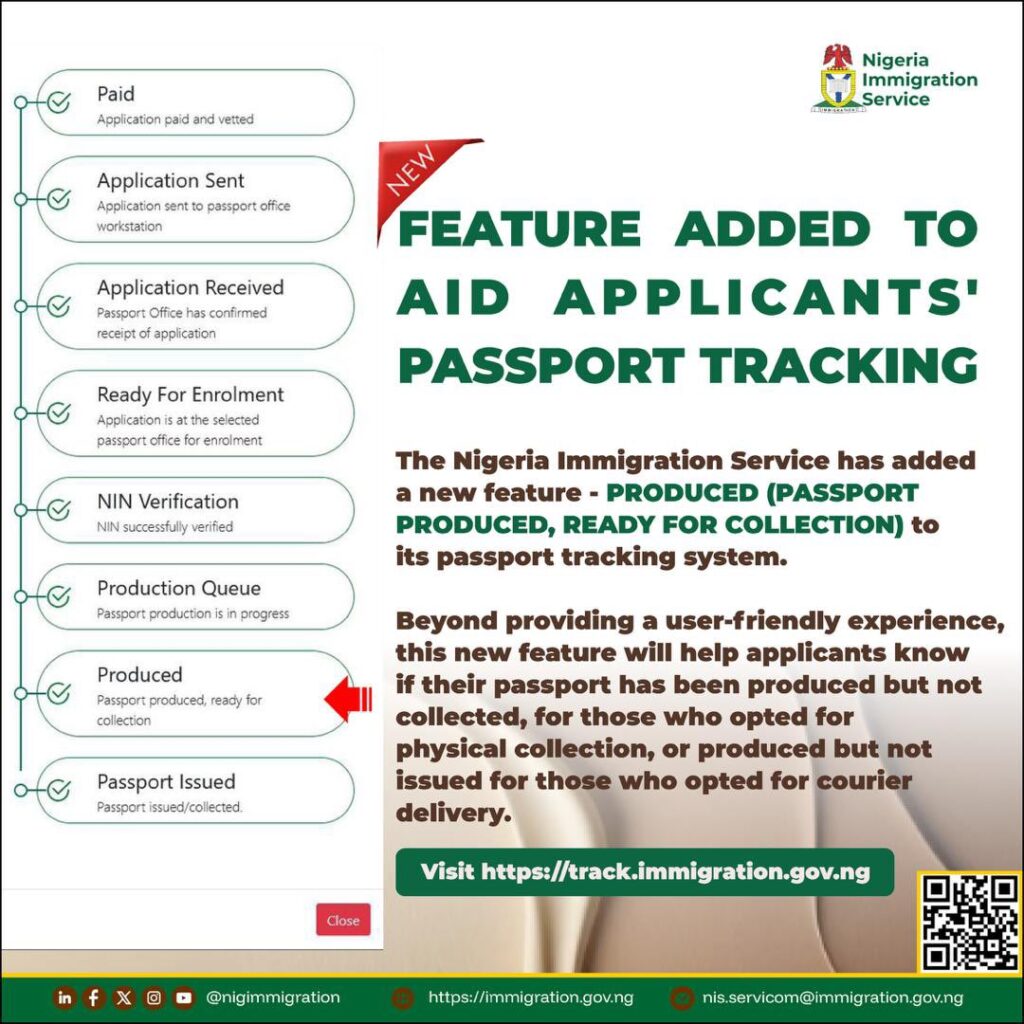
The Nigeria Immigration Service (NIS) has announced the rollout of an enhanced passport tracking feature in response to mounting public frustration over delays in passport issuance and collection across the country and in the diaspora. The update, disclosed in a statement posted on the Service’s official X (formerly Twitter) account on Thursday, comes after weeks of intense criticism from applicants who complained of prolonged waiting periods, lack of transparency, and alleged inefficiencies in the passport processing system.
According to the NIS, the decision to upgrade the tracking platform followed internal observations that hundreds of passports had already been produced but were left uncollected by applicants. This situation, the Service noted, contributed significantly to the growing perception that passport processing had stalled, even in cases where documents were actually ready for pickup or delivery.
To address this gap, the NIS introduced a new status on its passport tracking portal: “PRODUCED (PASSPORT PRODUCED, READY FOR COLLECTION)”. This additional status is designed to provide clearer and more precise information to applicants, enabling them to distinguish between passports that are still undergoing production and those that have been completed and are awaiting collection at passport offices or delivery via courier services.
The Service explained that the update is aimed at improving transparency and reducing uncertainty around passport processing timelines. By clearly indicating when a passport has been produced and is ready for collection, applicants can avoid unnecessary visits to immigration offices or prolonged anxiety over the status of their applications. For those who opted for courier delivery, the update is also expected to help track passports that have been produced but not yet delivered.
“This update enhances the existing tracking system and helps applicants stay informed about timelines for passports produced and awaiting collection (for physical collection) or produced but not delivered (for courier delivery),” the NIS stated. The Service expressed optimism that the new feature would ease tensions and improve public confidence in the passport issuance process.
The development comes against the backdrop of sustained public outcry on social media, particularly on X, where Nigerians—both at home and abroad—have shared personal experiences of delays stretching into several months. Some applicants alleged that the process was riddled with deliberate bottlenecks, poor communication, and unofficial charges, while others accused officials of prioritizing applicants with personal connections over those following official procedures.
In recent weeks, prominent Nigerians and ordinary citizens alike have amplified these complaints online, putting pressure on the Interior Ministry and the NIS to take corrective action. For many applicants, especially those seeking passports for urgent travel, medical care, education, or employment opportunities, the delays have had serious personal and financial consequences.
Reactions to the NIS announcement have been mixed. Some Nigerians welcomed the update as a step in the right direction, describing it as evidence that the Service is listening to public concerns and leveraging technology to improve service delivery. Supporters argue that clearer tracking information could reduce middlemen activities and the perceived need to “know someone” to get timely service.
However, critics remain skeptical, insisting that technology updates alone will not solve the deeper structural problems affecting passport issuance. They argue that unless issues such as staff shortages, alleged corruption, system downtimes, and inadequate production capacity are addressed, delays may persist despite improvements in tracking visibility. Some applicants also pointed out that similar tracking features had existed in the past but were not consistently updated, limiting their usefulness.
There are also concerns about the high cost of passports, particularly the 10-year validity option, with applicants reporting wide discrepancies between official fees and what they ultimately paid. These complaints have further fueled public distrust and reinforced calls for stronger oversight and accountability within the Immigration Service.
Nevertheless, the NIS insists that the upgraded tracking system is part of broader efforts to reform passport administration and enhance service delivery. As public scrutiny remains intense, many Nigerians will be watching closely to see whether the new tracking feature translates into faster processing times, reduced delays, and a more transparent, user-friendly passport system in practice, rather than just on paper.






Responses