Reps Set December 10–11 for Voting on Constitution Amendment Proposals as Lawmakers Intensify Debates

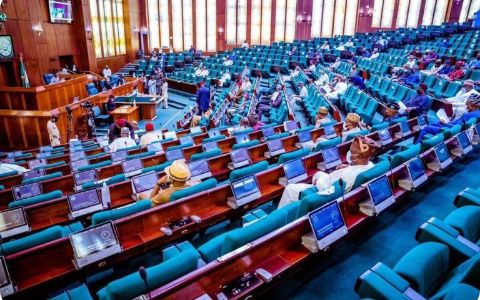
The House of Representatives has fixed December 10 and 11 as decisive dates for voting on a wide range of proposed amendments to the 1999 Constitution, marking a new phase in what is arguably Nigeria’s most extensive constitutional review effort since the return to democracy in 1999.
The announcement was delivered on Tuesday by Deputy Speaker Benjamin Okezie Kalu, who doubles as the Chairman of the House Committee on Constitution Review. Addressing lawmakers during plenary, Kalu explained that the Committee had completed all necessary technical work and was now prepared to present the harmonised documents for consideration.
According to him, debates on the various amendment bills will hold on Wednesday and Thursday of this week, giving lawmakers the opportunity to scrutinise and defend proposed changes before next week’s critical voting sessions.
Kalu reassured members that the Committee’s work had been rigorous, collaborative, and guided by input from lawmakers, constitutional experts, civil society organizations, and public memoranda gathered during nationwide consultations.
A Sweeping Reform Exercise Covering 87 Constitutional Amendment Bills
A total of 87 bills seeking to alter diverse sections of the 1999 Constitution are currently up for consideration. These bills span across some of Nigeria’s most contentious governance challenges—including electoral reform, judicial restructuring, state policing, and financial autonomy for local governments.
Several proposals stand out due to their potential to significantly reshape the Nigerian federation. These include:
-
Creation of additional seats for women in federal and state legislatures, designed to improve female political participation and representation.
-
Establishment of state police, a proposal driven by rising insecurity and longstanding demands for decentralised policing.
-
Creation of new states and local governments, responding to years of agitation from ethnic minorities and underrepresented communities.
-
Full autonomy for local government councils, aimed at curbing state-level interference, ensuring more transparent grassroots governance, and promoting development at the community level.
Lawmakers will also decide on electoral-related proposals, such as improving the credibility of Nigeria’s election processes, strengthening INEC, and addressing procedural gaps exposed in previous election cycles.
Public Expectations and Divergent Reactions
News of the upcoming vote has generated widespread public commentary. Many Nigerians view the review as an opportunity to address fundamental flaws in the 1999 Constitution—originally drafted during military rule—and to align it more closely with democratic and federal principles.
Advocates for state police argue that decentralised security architecture is long overdue, particularly given the inability of the federal police structure to effectively respond to localised security challenges. Others warn that without stringent safeguards, state police could be abused by governors to target political opponents or reinforce ethnic or religious bias.
Another major area of contention is the push for local government autonomy. Supporters believe that freeing local councils from the financial stranglehold of state governments would accelerate rural development, improve accountability, and restore the constitutionally guaranteed three-tier system of government. Critics, however, question whether local councils possess the administrative capacity to manage full autonomy responsibly.
A Constitutional Moment Looming
The scheduled voting on December 10 and 11 sets the stage for pivotal decisions that could redefine Nigeria’s political landscape for decades. However, even if the House approves the amendments, the proposals must still secure approval from two-thirds of State Houses of Assembly, as mandated by the constitution.
With Nigerians closely watching—and with debates already heating up across social and political circles—the coming days will test both the commitment of lawmakers and the nation’s appetite for far-reaching constitutional reforms.


Responses