Sheikh Gumi Refutes Claims of Arrest by U.S. Military, Describes Viral Image as AI-Generated


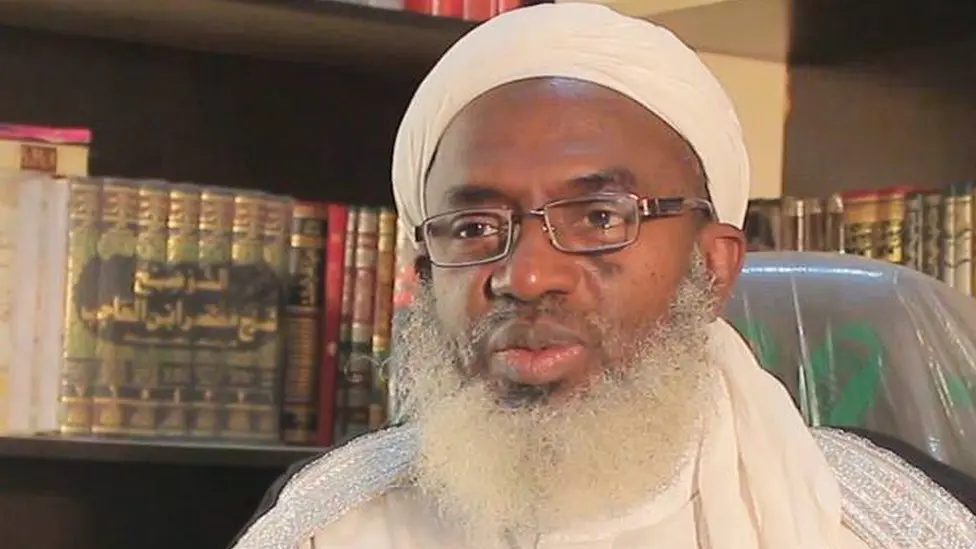
Prominent Islamic scholar and public commentator, Sheikh Ahmed Gumi, has firmly denied reports circulating on social media alleging that he was arrested by operatives of the United States military in Nigeria. The cleric dismissed the claims as false, misleading, and the product of digital manipulation, describing a widely shared image purportedly showing his arrest as an Artificial Intelligence (AI)-generated fabrication.
The controversy erupted on Thursday, February 5, following the circulation of a photograph on various social media platforms. The image appeared to depict Sheikh Gumi being escorted by armed U.S. soldiers at what was alleged to be a Nigerian airport. Accompanying captions and posts claimed that the cleric had been apprehended as part of a foreign-led counterterrorism operation and was allegedly attempting to flee Nigeria to Turkey.
The image spread rapidly, gaining significant traction online and provoking intense public debate, speculation, and commentary. Some posts went further to allege, without evidence, that Sheikh Gumi had links to terrorist organisations and that his supposed arrest was connected to broader international security operations in West Africa.
Responding to the reports, Sheikh Gumi categorically rejected the allegations, describing them as illogical and baseless. Speaking to journalists on Thursday, he questioned the plausibility of the claims and stressed that no such incident had occurred.
“The U.S. Army cannot arrest me in Nigeria. Why will the U.S. Army come and arrest me in Nigeria? For what reason?” he asked, dismissing the narrative as fundamentally flawed.
Addressing the viral photograph directly, Sheikh Gumi insisted that the image was not authentic and had been digitally created. According to him, the picture bears clear signs of artificial manipulation and should not be mistaken for a real event.
“The image is Artificial Intelligence–generated. Even a layman will know that the image is AI,” he stated, warning the public against accepting or spreading unverified content found on social media.
He reiterated unequivocally that he had not been arrested, detained, or questioned by any foreign or domestic security agency, adding that he remains a free citizen residing in Nigeria. Gumi emphasised that the reports making the rounds online were entirely false and urged the public to rely on credible news sources rather than sensational online posts.
The cleric also expressed concern over the growing misuse of artificial intelligence and digital tools to spread misinformation, particularly in politically and religiously sensitive contexts. He noted that manipulated images and false narratives have the potential to inflame tensions, damage reputations, and mislead the public if not properly scrutinised.
The incident has once again highlighted the increasing challenge posed by AI-generated content and fake news in Nigeria’s information space. With advancements in technology, fabricated images and videos can now appear highly realistic, making it difficult for many social media users to distinguish between authentic material and digital forgeries.
Observers note that Sheikh Gumi has long been a controversial figure in national discourse, frequently drawing public attention for his outspoken views on security issues, negotiations with armed groups, and governance. As a result, he often finds himself at the centre of heated debates, making him a recurring subject of rumours and misinformation online.
Media analysts warn that as Nigeria approaches another election cycle, the spread of disinformation—especially through manipulated images and unverified claims—is likely to intensify. They have called for greater media literacy among citizens, urging individuals to verify information before sharing it and to treat sensational claims with caution.
As of the time of reporting, there has been no confirmation from Nigerian security agencies or the United States government supporting the claim that Sheikh Gumi was arrested or detained in any capacity. The reports remain unsubstantiated, with the cleric’s denial standing as the only verified account of the incident.
The episode serves as a reminder of the dangers posed by unchecked social media narratives and the need for responsible information sharing in an era where digital fabrication has become increasingly sophisticated.


Responses