Tinubu Departs Nigeria for State Visit to Türkiye Amid Mixed Public Reactions

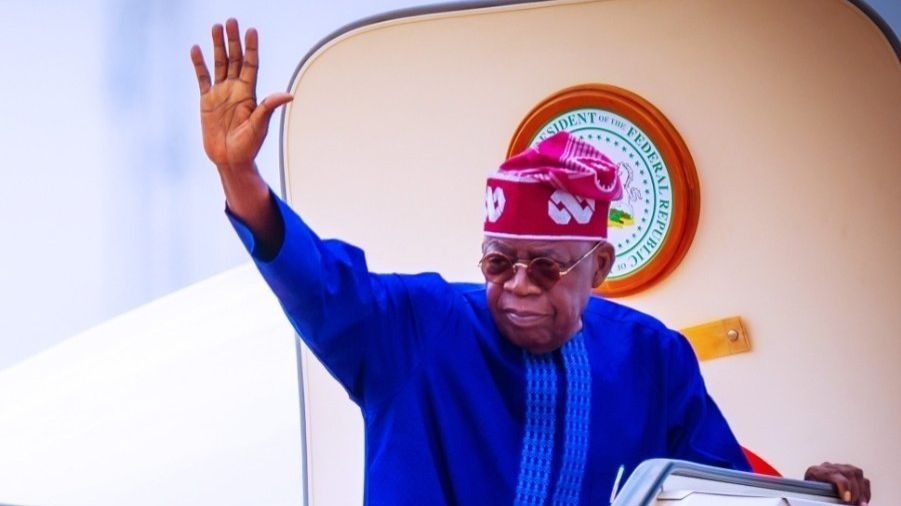
President Bola Ahmed Tinubu is scheduled to depart Abuja on Monday, January 26, for an official state visit to the Republic of Türkiye, in a move the Presidency says is aimed at deepening diplomatic, economic and security cooperation between both countries. The visit was formally announced by the President’s Special Adviser on Information and Strategy, Bayo Onanuga, who described the trip as part of Nigeria’s broader foreign policy engagement under the current administration.
According to the Presidency, the state visit is designed to strengthen the long-standing cordial relationship between Nigeria and Türkiye, while opening new fronts of collaboration in key sectors such as security, education, social development, innovation, aviation, trade and investment. The trip also serves as a reciprocal diplomatic gesture following the official visit of Turkish President Recep Tayyip Erdoğan to Nigeria in October 2021.
During President Tinubu’s stay in Türkiye, both countries are expected to engage in high-level political and diplomatic discussions centred on shared strategic interests. These discussions will reportedly focus on finance, communications, defence cooperation, trade expansion and investment opportunities, reflecting Türkiye’s growing footprint in Africa and Nigeria’s desire to diversify its international partnerships.
A major highlight of the visit will be the signing of several Memoranda of Understanding (MoUs) between Nigeria and Türkiye. These agreements are expected to cover a wide range of areas, including scientific and technological research, energy cooperation, technical assistance, media and communications, military collaboration and protocol matters. Government sources indicate that these agreements are intended to move bilateral relations beyond diplomacy into more practical and results-driven partnerships.
In addition to government-to-government engagements, a Nigeria–Türkiye business forum is scheduled to hold during the visit. The forum will bring together investors, business leaders and policymakers from both countries to explore opportunities for bilateral trade, industrial cooperation and private sector investment. Türkiye has, in recent years, increased its investments across Africa in construction, manufacturing, defence technology and aviation, making the forum a potentially significant platform for Nigerian entrepreneurs and institutions.
President Tinubu will be accompanied by a high-powered delegation of senior government officials. Members of the entourage include the Minister of Foreign Affairs, Ambassador Yusuf Tuggar; the Attorney General of the Federation and Minister of Justice, Prince Lateef Fagbemi (SAN); and the Minister of Defence, General Christopher Musa (rtd). Also joining the delegation is the Chairman of the House of Representatives Committee on Defence, Hon. Jimi Benson, underscoring the security dimension of the visit.
Other key officials expected on the trip include the Minister of Women Affairs and Social Development, Hajiya Imaan Suleiman-Ibrahim; the Minister of Interior, Olubunmi Tunji-Ojo; the Minister of Culture and Creative Economy, Hannatu Musawa; the National Security Adviser, Malam Nuhu Ribadu; and the Director-General of the National Intelligence Agency, Ambassador Mohammed Mohammed. The composition of the delegation suggests a broad agenda spanning governance, security, culture and economic development.
Despite the official framing of the visit as a strategic diplomatic engagement, news of the trip has generated intense reactions among Nigerians, particularly on social media and online forums. Supporters argue that international diplomacy is a core responsibility of any president and that strengthening ties with countries like Türkiye could yield tangible benefits, especially in defence technology and counter-terrorism, areas where Türkiye has developed significant expertise.
However, critics have expressed concern over what they describe as the President’s frequent foreign travels, questioning whether extended time abroad detracts from hands-on governance at home. Some commentators have mockingly referred to the presidency as “mobile,” while others argue that Nigeria currently faces serious economic and security challenges that require sustained domestic attention.
There are also sceptical voices who see the trip as symbolic rather than substantive, warning that Nigeria has historically signed numerous international agreements that yielded limited practical outcomes. Others question the balance of Nigeria’s diplomatic engagements, asking how many foreign leaders have paid reciprocal state visits to Nigeria in recent years.
Nonetheless, government officials maintain that President Tinubu’s foreign engagements are deliberate and aligned with his administration’s agenda of repositioning Nigeria globally, attracting investment and strengthening national security. They insist that the benefits of such visits may not always be immediate but are essential for long-term national interest.
President Tinubu is expected to return to Nigeria at the conclusion of the visit, after completing his official engagements in Türkiye. As with many of his foreign trips, the true impact of the visit is likely to be measured not by the announcements made, but by the extent to which signed agreements translate into concrete outcomes for Nigeria in the months and years ahead.



Responses