Tinubu’s Türkiye Visit Sparks Mixed Reactions as Presidency Pushes Deeper Bilateral Ties

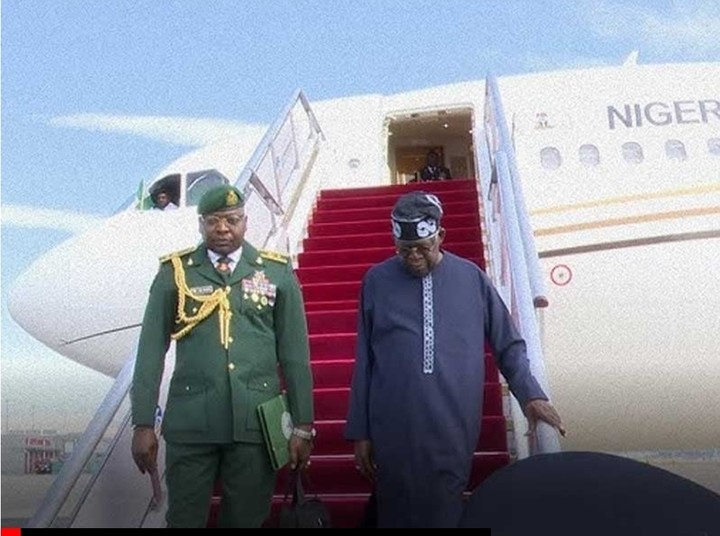
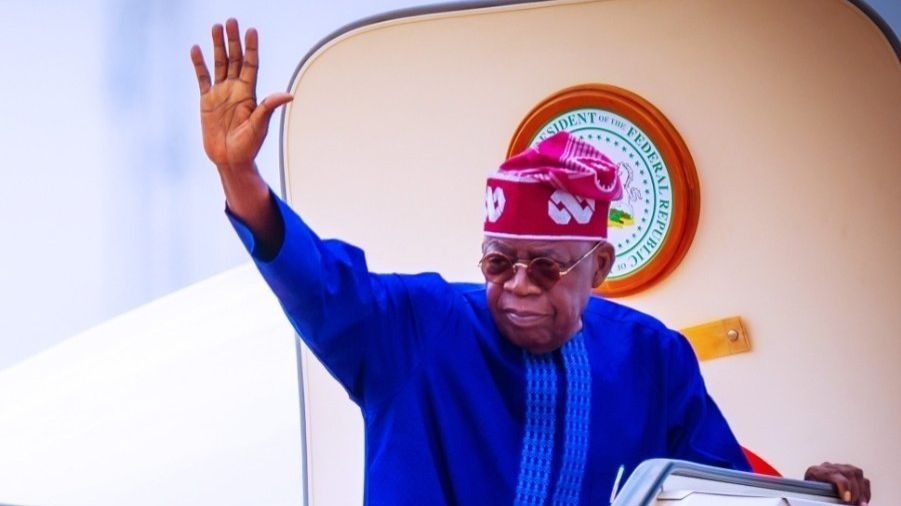
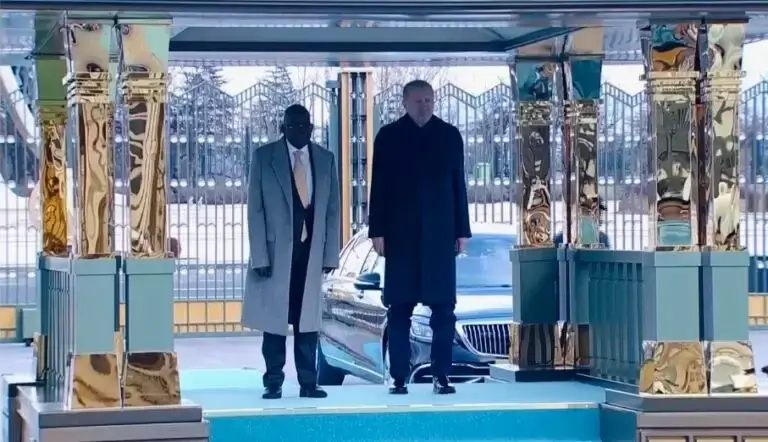
President Bola Ahmed Tinubu has arrived in the Republic of Türkiye for a state visit aimed at strengthening diplomatic, economic, and security relations between Nigeria and the Eurasian nation, a move the Presidency says is designed to unlock new opportunities for cooperation across multiple sectors. The President landed at the Ankara Esenboğan Airport at about 9:05 p.m. local time on Monday and was formally received by a Turkish government delegation led by the Minister of National Education, Yusuf Tekin, according to a statement from the State House media office.
Ahead of the visit, Tinubu’s Special Adviser on Information and Strategy, Bayo Onanuga, explained that the engagement would focus on expanding collaboration in critical areas such as security, education, social development, innovation, aviation, trade, and investment. He noted that both countries would also hold high-level political and diplomatic talks centered on shared interests in finance, communications, and economic development.
The agenda for the state visit includes bilateral meetings between top officials of Nigeria and Türkiye, as well as the signing of several memoranda of understanding (MoUs). These agreements are expected to cover strategic sectors including scientific research, energy, technical cooperation, media and communications, military collaboration, and diplomatic protocol. A Nigeria–Türkiye business forum is also scheduled, bringing together investors and private-sector players from both countries to explore areas of mutual commercial interest and potential partnerships.
According to the Presidency, the visit is a reciprocal gesture following Turkish President Recep Tayyip Erdoğan’s official visit to Nigeria in October 2021. Officials say it underscores Nigeria’s intention to deepen ties with non-traditional allies and diversify its international partnerships beyond its usual Western focus.
Tinubu is accompanied by a high-powered delegation that reflects the breadth of discussions planned during the visit. Members of the entourage include the Minister of Foreign Affairs, Yusuf Tuggar; the Attorney-General of the Federation and Minister of Justice, Lateef Fagbemi; the Minister of Defence, Christopher Musa; and the Chairman of the House of Representatives Committee on Defence, Jimi Benson. Others are the Minister of Women Affairs and Social Development, Imaan Suleiman-Ibrahim; Minister of Interior, Olubunmi Tunji-Ojo; Minister of Culture and Creative Economy, Hannatu Musawa; National Security Adviser, Nuhu Ribadu; and the Director-General of the National Intelligence Agency, Mohammed Mohammed.
While the Presidency has framed the trip as a strategic diplomatic engagement with clear economic and security benefits, the visit has triggered a wave of mixed reactions among Nigerians, particularly on social media and online forums. Some commentators questioned the frequency of the President’s foreign travels, labeling him a “travelling apostle” and arguing that such trips amount to a drain on public funds without tangible benefits for ordinary citizens. Critics demanded clearer explanations of how the visit would directly improve Nigeria’s economy, security situation, or cost-of-living crisis.
Others took a more sarcastic tone, joking about the country’s name change from “Turkey” to “Türkiye,” a move officially recognized by the United Nations in 2022. The use of “Türkiye” in official communications sparked debates among commenters, some of whom mocked the spelling, while others corrected them by explaining that it is the country’s formal and internationally recognized name.
There were also political undertones in the reactions, with opposition voices using the visit as another opportunity to criticize Tinubu’s leadership style and priorities. Some accused the administration of focusing more on foreign diplomacy than domestic challenges, while others compared the trip to past foreign travels by previous administrations, arguing that Nigerians have grown cynical because many such visits rarely translate into visible outcomes at home.
Supporters of the President, however, defended the trip, insisting that international diplomacy is a core responsibility of any head of state. They argued that Türkiye’s growing influence in defence manufacturing, infrastructure development, and technology makes it a valuable partner for Nigeria, particularly at a time when the country is seeking alternatives in security cooperation and industrial development. Some also pointed to Türkiye’s role in drone technology, construction, and aviation as areas where Nigeria could benefit significantly if agreements signed during the visit are effectively implemented.
As Tinubu continues his engagements in Ankara, expectations remain cautiously divided. For supporters, the visit represents proactive diplomacy and an attempt to reposition Nigeria on the global stage. For critics, it is another test of whether foreign trips by Nigerian leaders can finally move beyond symbolism and deliver concrete results.
Tinubu is expected to return to Nigeria at the conclusion of the visit, with Nigerians watching closely to see whether the promises of strengthened Nigeria–Türkiye relations will translate into measurable gains for the country.


Responses