Uganda Faces Backlash Over Migrant Deal With the US

Uganda, already home to the largest refugee population in Africa, is once again in the international spotlight after agreeing to a controversial arrangement with the United States. The East African nation has confirmed it will temporarily take in migrants who have been denied asylum in the US but are unwilling or fearful of returning to their countries of origin. The decision, however, has stirred a storm of criticism at home, with many Ugandans questioning both the transparency and the wisdom of the deal.
The announcement came last week from Uganda’s foreign ministry, which described the arrangement as temporary and subject to conditions. Among those conditions are exclusions for people with criminal records and unaccompanied minors. The ministry also made clear that Uganda would prefer to receive deportees from African countries rather than other regions. Despite these clarifications, the move has ignited debate in Kampala and beyond about whether the government is once again overextending itself at the expense of its citizens.
For context, Uganda is already host to nearly two million refugees, most of whom fled wars and humanitarian crises in South Sudan and the Democratic Republic of the Congo. Over the years, Uganda has earned international praise for its relatively open refugee policy, which allows displaced people to work, move freely, and access public services. Yet many argue that the country’s resources are stretched thin. Basic services such as healthcare, education, and infrastructure are under immense strain, and aid organizations have often warned that funding for refugee programs is insufficient.
That reality explains why opposition voices have been quick to challenge the new deal. “The whole scheme stinks,” said Mathias Mpuuga, until recently the leader of Uganda’s opposition in parliament. His criticism is not just about the burden of taking in more migrants, but also about the lack of parliamentary oversight in approving the arrangement. According to him and other critics, the decision reflects a worrying trend of the executive bypassing public institutions on matters of national importance.
The controversy has also been intensified by the case of one man: Salvadoran national Kilmar Abrego Garcia. Abrego Garcia has been at the centre of a legal battle in the United States after being wrongly deported to El Salvador in violation of a 2019 court order. He was later returned to the US, where he now faces federal criminal charges. The Trump administration has sought to deport him again, this time to Uganda. But Abrego Garcia has argued in court that he fears persecution or torture if sent there, and a judge has temporarily blocked his removal while his claim is assessed. His story illustrates just how complicated the Uganda-US arrangement could become, especially as it intersects with human rights and international law.
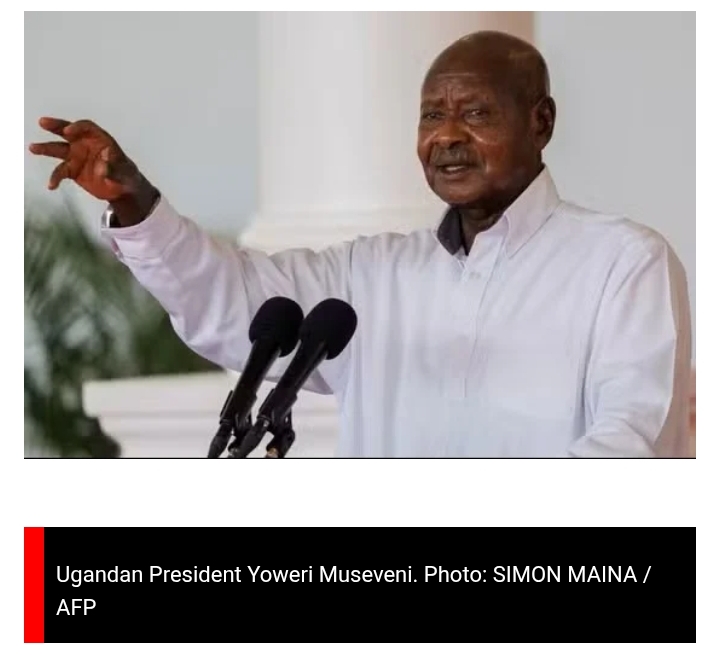
Adding to the intrigue, last week US Secretary of State Marco Rubio spoke with Ugandan President Yoweri Museveni. According to a State Department statement, the two leaders discussed migration, trade, and commercial ties. What was not made clear, however, was how many migrants the US expects to send to Uganda or when they might arrive. Museveni’s press secretary declined to comment further, and Ugandan officials have only said that discussions with Washington are ongoing.
Uganda is not the first African nation to sign such a deal. Rwanda, South Sudan, and Eswatini have also entered into agreements with the US to host deportees. But for Uganda, the move comes with particular sensitivity. Amnesty International has in the past accused Kampala of secretly receiving deported asylum seekers from Israel, a claim Ugandan authorities denied. Those past controversies feed into the current skepticism, with many asking whether Uganda is once again allowing itself to become a dumping ground for richer nations.
Beyond the humanitarian and logistical questions, analysts say the timing of the agreement could carry political consequences. Uganda is preparing for presidential elections next year, and President Museveni, now 80, has announced plans to run again. Museveni has ruled Uganda since 1986 and is widely described as authoritarian, with critics accusing him of repressing opposition voices, clamping down on the press, and manipulating institutions to entrench his power. Some observers believe the US deal could provide his government with cover from international criticism at a time when scrutiny should be sharpening.
Nicodemus Minde, a researcher at the Institute for Security Studies, suggested that Washington’s engagement with Museveni could help shield his administration from accountability. “The agreement between the US and Uganda may shield the Ugandan government from critical scrutiny regarding its authoritarian practices, particularly as the country approaches a general election,” he explained. In other words, the deal may serve political interests as much as humanitarian ones.
Journalists and researchers in Uganda echo these concerns. Raymond Mujuni, a Ugandan journalist and international relations scholar, warned that the deal “helps relieve the US of its burden” but offers little in return for Uganda. He pointed out that the country already struggles to support its existing refugee population and argued that this new arrangement could “exert more pressure on its scarce resources.”
The backlash reveals a deeper frustration among many Ugandans about the way international migration agreements are negotiated. To them, Uganda seems to be acting more as a service provider to powerful countries than as a sovereign state prioritizing its own citizens’ needs. While Uganda has long prided itself on its humanitarian credentials, the question now is whether its generosity is sustainable or being exploited.
For the United States, the deal with Uganda fits into a broader strategy of outsourcing deportations to third countries. By transferring migrants who cannot be returned to their home countries, the US relieves itself of political and logistical challenges. For Uganda, however, the arrangement risks compounding already serious domestic pressures, from underfunded refugee services to growing political tensions ahead of an election.
The coming months will reveal more about how this agreement is to be implemented. For now, what is clear is that Uganda finds itself at a crossroads. On one hand, it can present itself as a reliable partner to the US and an ongoing leader in refugee hospitality. On the other, it faces rising discontent at home, where citizens worry their government is making commitments without adequate debate, oversight, or capacity to deliver.
In the shadow of Museveni’s long rule and in the context of Uganda’s already heavy humanitarian responsibilities, the deal raises difficult questions about fairness, sovereignty, and accountability. Whether Uganda will ultimately benefit or pay the price for accepting migrants unwanted by the US remains to be seen.





Responses