Ugandan President Museveni Seeks Seventh Term After Nearly 40 Years in Power, Stirring Debate Over Leadership and Succession

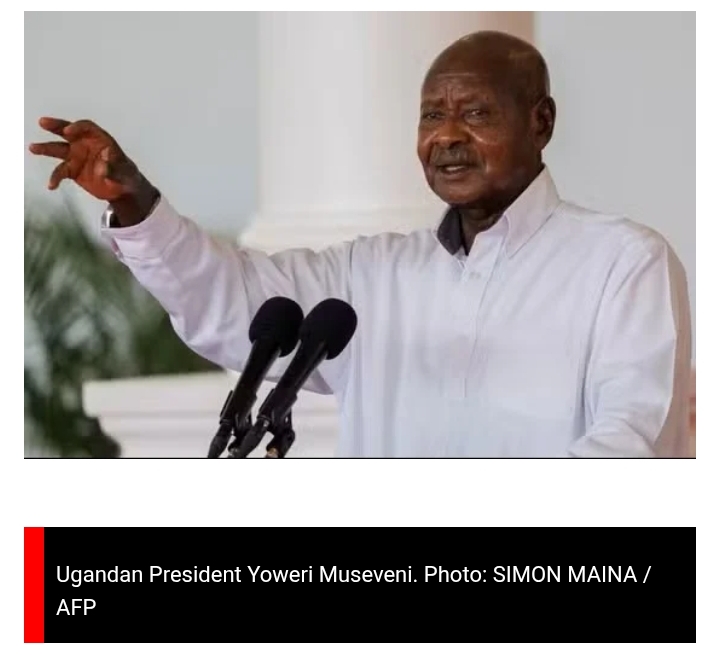
When Yoweri Museveni marched into Kampala in 1986 after years of armed struggle, he presented himself as a reformer determined to rescue Uganda from the cycle of dictatorship and instability that had defined much of its post-independence history. At the time, Museveni famously declared that “the problem of Africa in general and Uganda in particular is not the people but leaders who want to overstay in power.” Nearly four decades later, that statement has returned to haunt him as the 81-year-old president seeks a seventh term in office, extending a rule that has already spanned almost 40 years.
Museveni’s long stay in power makes him one of Africa’s longest-serving leaders, and for most Ugandans alive today, he is the only president they have ever known. His rise initially inspired hope both at home and abroad. As a former rebel leader who fought against autocratic regimes, Museveni was seen as part of a new generation of African leadership that promised accountability, stability, and development. Western governments applauded his early efforts to restore order, attract foreign investment, and rebuild state institutions shattered by years of misrule under leaders such as Idi Amin and Milton Obote.
However, that early goodwill has steadily eroded. Over the years, Museveni’s administration has faced persistent allegations of corruption, authoritarianism, and the shrinking of democratic space. According to Kristof Titeca, a professor at the University of Antwerp, corruption has been “central to his rule from the beginning.” While Museveni has acknowledged that corruption exists within his government, he maintains that officials found guilty have been prosecuted. Critics, however, argue that corruption has become systemic, weakening public institutions and eroding trust in governance.
Despite these criticisms, Museveni has proven to be a shrewd political strategist on the international stage. He has carefully aligned Uganda with Western security interests by contributing peacekeeping troops to conflict zones such as Somalia and South Sudan, while also hosting large numbers of refugees from across the region. These actions have earned Uganda diplomatic leverage and financial support from foreign partners. More recently, Museveni has diversified Uganda’s alliances, strengthening ties with China, Russia, Iran, and the United Arab Emirates, reducing reliance on Western backing.
Domestically, Museveni’s record is mixed. His government is credited with major achievements, including progress in combating the HIV/AIDS epidemic and defeating the Lord’s Resistance Army, which terrorised northern Uganda for nearly two decades. Yet, many Ugandans argue that these successes are overshadowed by deepening inequality, decaying public services, and limited economic opportunities. UNICEF data shows that only one in four children who begin primary school in Uganda make it to secondary education, while unemployment and underemployment remain widespread, particularly among the youth.
Museveni’s political journey is inseparable from Uganda’s turbulent history. After years in exile, he led a guerrilla movement that helped force Idi Amin from power. Obote returned to office in 1980 but was later toppled in a 1985 coup. In 1986, Museveni’s National Resistance Movement overthrew President Tito Okello, ushering in a new era. At his swearing-in, Museveni declared that his victory was not “a mere change of guard” but a “fundamental change” in Ugandan politics. Many now argue that this promise remains unfulfilled.
Over time, constitutional changes have helped cement Museveni’s grip on power. In 2005, parliament removed presidential term limits, a move widely criticised as a calculated attempt to keep him in office indefinitely. Museveni has since won all six elections he has contested, though opposition candidates have repeatedly rejected the results, alleging electoral irregularities, intimidation, and the misuse of state security forces. Authorities have consistently denied these claims, even as police and military units have cracked down on protests.
Museveni’s main challenger in the current election is Bobi Wine, a 43-year-old musician turned politician who has galvanised young Ugandans frustrated with decades of stagnation. Yet, analysts widely expect Museveni to retain power. The bigger uncertainty lies in what happens next, especially as the president shows signs of physical frailty.
The question of succession now looms large. Attention has increasingly focused on Museveni’s son, Muhoozi Kainerugaba, Uganda’s military chief, whose rapid rise through the ranks has fuelled accusations of dynastic ambitions. Opposition figures claim Museveni is preparing the ground for a family succession, sidelining veteran politicians who once fought alongside him.
As one veteran journalist, Charles Onyango-Obbo, observed, the election is less about who wins and more about the atmosphere it creates. While Museveni appears determined to remain in charge, many Ugandans worry that prolonged rule, weakened institutions, and unresolved succession plans could leave the country facing an uncertain and potentially unstable future.



Responses