“You Can’t Teach Me”: Rufai Oseni and Lawyer Godspower Egbule Clash Over Rivers Politics in Heated Interview


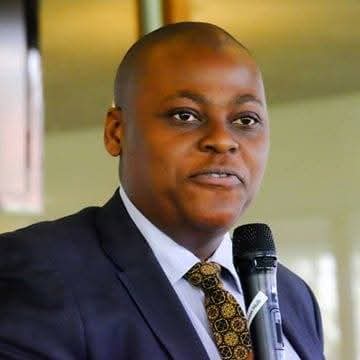
A tense and widely discussed exchange unfolded during a recent televised interview when Arise News presenter Rufai Oseni clashed openly with lawyer and public affairs analyst, Godspower Egbule, over the ongoing political crisis in Rivers State. The interview, which has since gone viral on social media, centred on the impeachment threats facing Governor Siminalayi Fubara and the constitutional processes surrounding such proceedings.
The heated moment reportedly occurred when discussions shifted to whether the courts should immediately intervene in the impeachment moves against the Rivers State governor. Egbule firmly maintained that any rush to the judiciary at this stage would be premature and constitutionally inappropriate. According to him, impeachment is a political process clearly outlined in the Nigerian Constitution and must be allowed to run its full course before judicial intervention becomes relevant.
Egbule anchored his argument on Section 188 of the 1999 Constitution (as amended), which explicitly spells out the impeachment procedure for a sitting governor. He explained that the process begins with a notice of allegation supported by at least one-third of the members of the House of Assembly and submitted to the Speaker. The Speaker is then required to serve the notice on the governor. After this, the House must pass a motion—again supported by at least one-third of its members—requesting the Chief Judge of the state to constitute a seven-man investigative panel.
According to Egbule, it is only after this panel is set up, carries out its investigation, and submits its findings that further constitutional steps can be taken. Any attempt by the legislature, executive, or judiciary to act outside this clearly defined sequence, he warned, would amount to an ultra vires action—beyond the powers granted by the Constitution.
“At this point, it would be too hasty for anybody to rush to court,” Egbule stated during the interview. “The three arms of government are circumscribed by the provisions of the Constitution. It would be ultra vires for the legislature to make moves outside the Constitution, and it would equally be ultra vires for the courts to issue orders outside what the Constitution permits.”
However, the calm legal exposition soon gave way to a sharp verbal exchange as Rufai Oseni repeatedly challenged the lawyer’s assertions, pressing him on issues of constitutional interpretation, political realities, and the role of the media in scrutinising power. At a point, the exchange became confrontational, with Rufai reportedly pushing back forcefully against what he perceived as attempts to “lecture” him, leading to the now-viral remark interpreted by viewers as “You can’t teach me.”
The clash instantly sparked massive reactions online, particularly on Nairaland and other social media platforms. While many viewers criticised Rufai Oseni for what they described as his aggressive and combative interviewing style, others praised him for asking tough questions and refusing to allow guests dominate the narrative unchecked. Some commentators argued that Rufai’s approach reflects proper journalism, especially in a political environment where public officials and analysts often avoid accountability.
On the other hand, a significant number of viewers expressed admiration for Godspower Egbule, describing him as calm, knowledgeable, and firmly grounded in constitutional law. Supporters noted that despite the confrontational tone of the interview, the lawyer maintained his position and consistently referred back to the Constitution, rather than engaging in personal attacks.
The interview has also reignited broader debates about journalism ethics and style in Nigeria. Critics of Rufai Oseni accused him of turning interviews into confrontations and prioritising drama over substance, while supporters insisted that Nigerian politicians and political analysts have grown too comfortable with soft interviews and need to be subjected to tougher scrutiny.
Beyond the media clash, the conversation highlighted the deep political tensions in Rivers State, where power struggles between rival factions have continued to dominate national discourse. The legal uncertainty surrounding Governor Fubara’s position has made constitutional interpretation a central issue, further intensifying public interest in discussions like the one that played out on live television.
In the end, the Rufai–Egbule clash has done more than generate viral headlines. It has drawn renewed attention to the constitutional safeguards around impeachment, the limits of judicial intervention, and the evolving role of journalists in Nigeria’s democracy. Whether viewed as unnecessary hostility or robust engagement, the interview has undeniably succeeded in sparking nationwide debate on both Rivers politics and the conduct of political journalism in Nigeria.



Responses