Dangote Refinery Dismisses Petrol Unit Shutdown Rumour

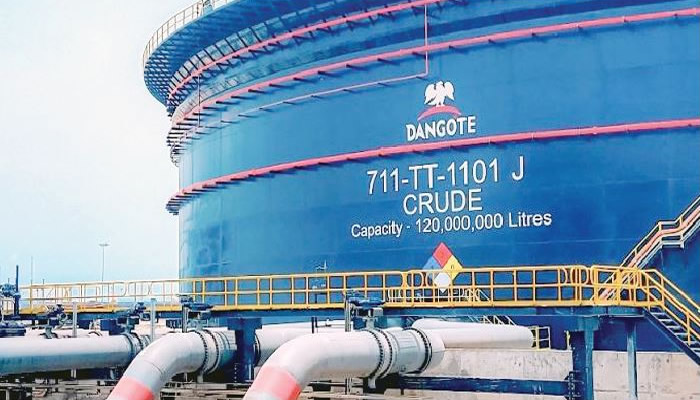
The Dangote Petroleum Refinery has firmly denied reports suggesting it plans to shut down its petrol production unit for up to three months. The company’s spokesperson, Anthony Chiejina, described the circulating story as “fake news” and dismissed claims of imminent repairs as speculative and unfounded.
The controversy arose after Reuters, citing industry monitor IIR Energy, reported that the refinery’s Residue Fluidised Catalytic Cracking Unit (RFCCU) had been out of service since late August following a catalyst leak. The report alleged that efforts were underway to restart the 204,000-barrel-per-day unit by September 20, but major repairs and equipment replacements could prolong the shutdown for months.
Reacting swiftly, Chiejina questioned the credibility of the report, particularly its speculative tone. “Fake news. Why ‘could’ if they are sure?” he asked when contacted for clarification. He insisted that the plant remains operational and that there are no plans to halt petrol production.
Since its commissioning in January 2024, the 650,000-barrel-per-day refinery has significantly altered fuel supply dynamics across regions. One of its most notable impacts has been on European gasoline exports to West Africa. Data from Kpler, an energy market analytics platform, shows that shipments from the European Union and the United Kingdom to Nigeria fell from an average of 200,000 barrels per day in 2024 to around 120,000 barrels daily in the first half of 2025.
The refinery has also broken into the highly competitive United States market. In recent months, it shipped two gasoline cargoes to the US East Coast, including deliveries to the New York area. This development was seen as a milestone achievement, as many in the industry had been watching closely to determine when the refinery would meet US fuel specifications.
Looking ahead, the Dangote refinery is on track to increase its refining capacity to 700,000 barrels per day by December 2025. The ramp-up is expected to cement its status as the largest single-train refinery in the world and a cornerstone of Nigeria’s quest for energy security.
In addition to expanding capacity, the refinery has been actively diversifying its crude supply. In August, it imported Sankofa crude from Ghana for the first time, marking a significant shift in feedstock sourcing. Sankofa, a medium-sweet crude grade, is heavier than the light sweet grades typically processed at the facility. It joins other medium-sweet varieties like Brazil’s Mero and Tupi as well as Angola’s Pazflor, which the refinery has successfully refined.
According to Kpler, the arrival of a 900,000-barrel Suezmax tanker carrying Sankofa crude in early August underscored Dangote’s flexibility in adjusting its feedstock mix to optimize operations.
Despite its achievements, the refinery continues to face challenges in securing adequate crude oil supplies domestically. Nigeria’s oil production has struggled in recent years due to theft, vandalism, and underinvestment in upstream infrastructure. As a result, Dangote has increasingly turned to foreign sources to meet its feedstock needs.
Minister of State for Petroleum Resources (Oil), Heineken Lokpobiri, recently acknowledged these challenges and stressed the urgent need to boost local production. He noted that meeting the refinery’s demand, while also ensuring exports and domestic market stability, requires a significant ramp-up in Nigeria’s crude output.
Statistics from Kpler indicate that crude deliveries to the Dangote refinery surged to a record high of 570,000 barrels per day in July. Remarkably, about 60 percent of this volume came from the United States, while the remaining 40 percent consisted of Nigerian crude grades such as Bonny Light, Escravos, and Amenam.
For the first time, US crude supplies surpassed Nigerian deliveries in Dangote’s import mix. Analysts believe this shift reflects both the refinery’s adaptability and the cost competitiveness of West Texas Intermediate (WTI) crude relative to Nigerian grades.
Kpler’s data also suggests that the refinery is operating at elevated levels. Estimates place its current throughput at about 445,000 barrels per day, or 68 percent of total capacity. This marks an improvement from the first quarter of the year, when throughput averaged 400,000 barrels per day, equivalent to 60 percent of capacity.
While operations are expected to remain steady in the months ahead, industry watchers anticipate a temporary dip during scheduled maintenance between December and January, when throughput could fall back to around 400,000 barrels per day.
Despite these operational adjustments, the refinery’s trajectory remains upward. Its growing role in reshaping fuel flows across continents highlights its strategic importance not only to Nigeria but also to global energy markets.
The Dangote refinery represents one of the most ambitious industrial projects in Africa and is widely seen as a game-changer for Nigeria’s economy. By reducing dependence on imported fuel and creating opportunities for exports, it is expected to save the country billions of dollars in foreign exchange.
Furthermore, the facility provides thousands of direct and indirect jobs while fostering the growth of ancillary industries such as shipping, logistics, and petrochemicals. Its success is closely tied to Nigeria’s broader economic strategy of industrialization and energy self-sufficiency.
Although controversies like the recent shutdown rumours may surface occasionally, the refinery’s continued operations and milestones demonstrate resilience and progress. Industry analysts believe that with stable crude supply, effective government support, and ongoing technical innovation, the refinery will continue to drive Nigeria’s transformation into a net exporter of refined petroleum products.



Responses