France Assisted Benin in Foiling Weekend Coup Attempt, Macron’s Aide Confirms

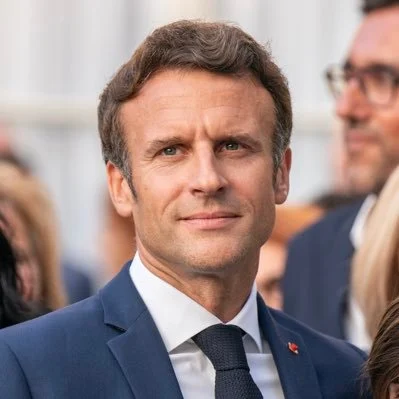
French authorities played a significant role in helping the government of Benin avert a coup attempt over the weekend, an aide to French President Emmanuel Macron has revealed. The disclosure, made on Tuesday, sheds light on a coordinated regional response to what would have been the latest in a troubling wave of military takeovers sweeping across West Africa.
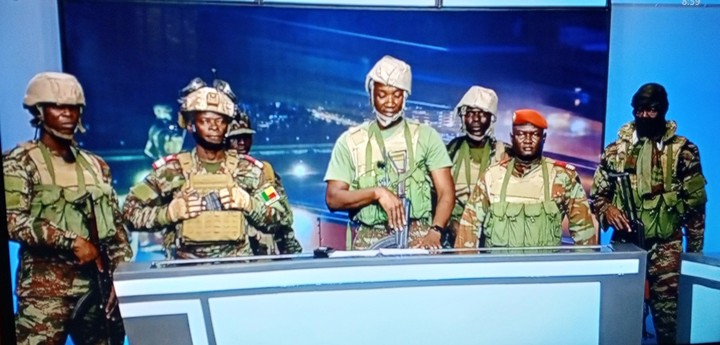
According to the aide, who spoke to reporters on condition of anonymity, President Macron personally spearheaded a diplomatic and security coordination effort after being alerted to the attempted takeover on Sunday. The French leader was in contact with several key West African heads of state as events rapidly unfolded in Cotonou, where a faction of soldiers briefly seized the national television station and falsely announced that President Patrice Talon had been removed from office.
In response to the Beninese government’s request, France provided support described as “surveillance, observation, and logistical assistance” to help the country’s armed forces contain the situation. While the aide did not reveal the specifics of the surveillance or logistical tools deployed, the assistance reportedly complemented action taken by loyalist military units and regional allies.
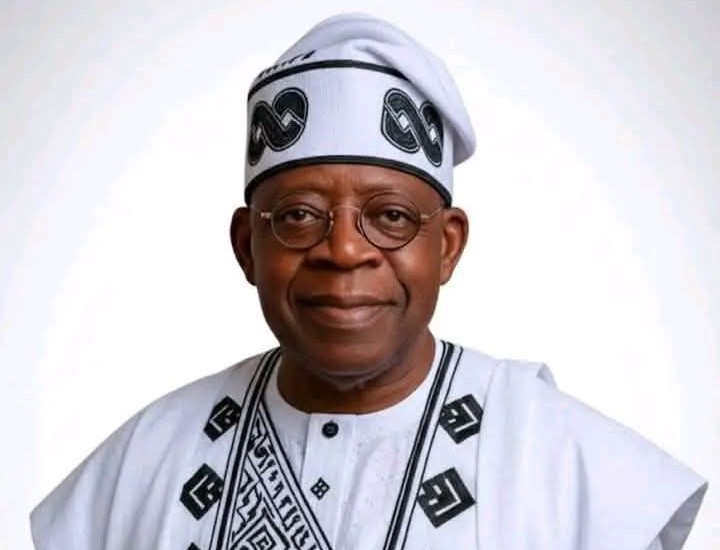
Benin’s armed forces, supported by neighbouring Nigeria, ultimately regained control. Nigeria is said to have carried out limited military strikes around Cotonou and deployed troops to reinforce loyalist units—another sign of the heightened regional concern regarding democratic stability in West Africa.
The attempted coup in Benin is the latest in a string of destabilising events that have plagued the region over the past five years. Multiple countries—including Mali (2020 and 2021), Burkina Faso (2022), and Niger (2023)—have all experienced military takeovers, many of which resulted in the expulsion of French troops who had been deployed as part of counter-terrorism missions. Each successful coup has weakened France’s influence in its former colonies and challenged traditional diplomatic relationships.
A coup in Benin, a country long regarded as one of the region’s more stable democracies, would have been seen as another serious blow to France’s standing in West Africa. It would also have posed a new threat to regional governance, particularly at a moment when ECOWAS faces mounting pressure to address both jihadist violence and political instability.
Macron spoke on Sunday with President Talon and with leaders of Nigeria and Sierra Leone—the latter being the current chair of ECOWAS. The French aide described the situation as one that “caused serious concern” for Macron, noting that he “unequivocally condemned the attempt at destabilisation, which fortunately failed.”
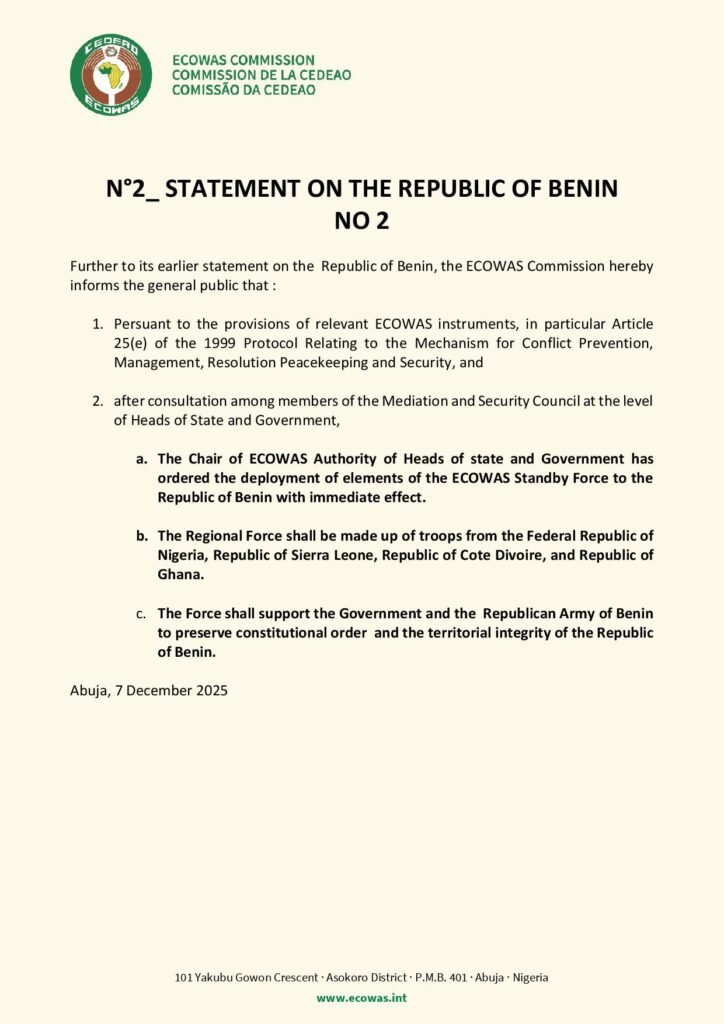
ECOWAS, which has struggled in recent years to respond decisively to coups in the region, announced that troops from Ghana, Ivory Coast, Nigeria, and Sierra Leone were being deployed to Benin to help preserve constitutional order. Omar Alieu Touray, president of the ECOWAS Commission, declared that “our community is in a state of emergency,” citing the twin threats of jihadist insurgency and unconstitutional changes of government.
The attempted putsch appears to have been short-lived. According to Benin’s loyalist military sources, at least a dozen of the plotters were arrested, and hostages—including senior officers—had been freed by Monday. President Talon, 67, appeared on national television late Sunday to calm the nation, assuring citizens that the situation was “completely under control.”
Benin is preparing for a major political transition, as Talon is expected to leave office in April after completing the maximum two terms permitted under the constitution. The country has recently faced rising instability linked to jihadist activity in its northern regions, increasing concerns about internal security.
Former Beninese president Thomas Boni Yayi also condemned the coup attempt in strong terms. In a video message, he reaffirmed that political power must be transferred only through free and transparent elections, calling the failed plot a “bloody and shameful attack” on the nation.
The incident has reignited debate about foreign influence, regional security cooperation, and the future of democracy in West Africa. For France, the thwarted coup represents both a diplomatic victory and a moment of cautious relief, as it strives to rebuild influence in a region where its presence has drastically receded in recent years.


Responses