Military Coup Rocks Benin Republic as Soldiers Announce Takeover on State Television

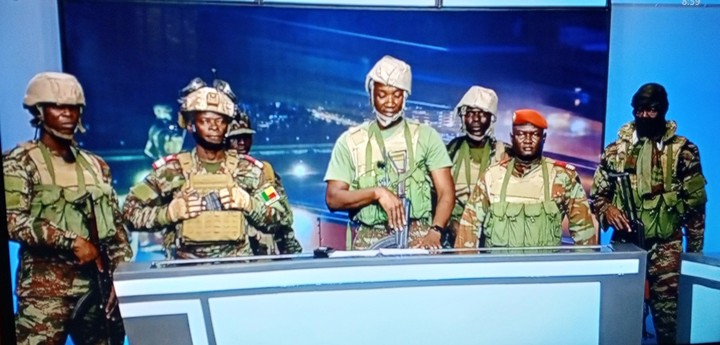
Benin Republic was thrown into political uncertainty on Sunday morning after a group of soldiers appeared on the national television channel to announce that they had seized power in what appears to be the latest military coup in West Africa. The soldiers, who identified themselves as the Military Committee for Refoundation, declared the dissolution of all state institutions and the suspension of the country’s November 2025 constitution.
During the broadcast, the officers announced that President Patrice Talon had been removed from office, and that all political activities were suspended until further notice. They further ordered the closure of all land, sea, and air borders, effectively isolating the small West African nation as they tightened their grip on power. The whereabouts of President Talon remain unknown at the time of the announcement.
Patrice Talon, who has governed Benin since 2016, was expected to step down next April at the conclusion of his second and final term. His party had selected former Finance Minister Romuald Wadagni as its preferred successor, a figure widely considered the frontrunner in the upcoming election. However, the political climate had been tense in the weeks leading up to the coup. The opposition’s leading candidate, Renaud Agbodjo, was disqualified by the electoral commission for allegedly lacking the required number of sponsors—a move critics interpreted as politically motivated.
Just a month earlier, Benin’s legislature passed a controversial amendment extending the presidential term from five to seven years, while maintaining a two-term limit. Although the decision technically did not extend Talon’s own tenure, analysts argued that the amendment signaled deeper political maneuvering within the ruling elite and contributed to rising tensions across the country. Many observers now believe the military viewed the political environment as unstable enough to intervene.
Sunday’s takeover has drawn immediate regional concern, especially given West Africa’s recent wave of military coups in Mali, Guinea, Burkina Faso, Niger, and Gabon. The pattern has led to growing alarm over democratic backsliding across the region. Citizens and analysts alike have expressed worry that West Africa is becoming increasingly volatile due to longstanding issues such as weak institutions, allegations of corruption, contested elections, economic stagnation, and rising insecurity.
Many political commentators argue that coups often occur where citizens feel disconnected from leadership and where trust in democratic systems has eroded. Benin, once considered one of the region’s most stable democracies, has in recent years faced criticism for shrinking political space, restrictions on opposition figures, and constitutional changes viewed as favoring incumbents. These developments have fueled dissatisfaction and provided fertile ground for military intervention.
Across the region, citizens have reacted with a mix of shock, fear, and resignation. While some see the coup as another symbol of widespread frustration with African leaders who fail to deliver governance and development, others worry about the dangerous precedent of military intervention and its destabilizing effect on neighboring countries.
With borders sealed, institutions dissolved, and uncertainty surrounding the fate of President Talon, Benin now stands at a critical crossroads. Regional and international bodies are expected to respond in the coming hours, but for now, the West African nation has joined the growing list of countries grappling with the consequences of abrupt military rule.

Responses