Akpabio Backs Anioma State Creation, Proposes Asaba as Capital and Warri for Delta

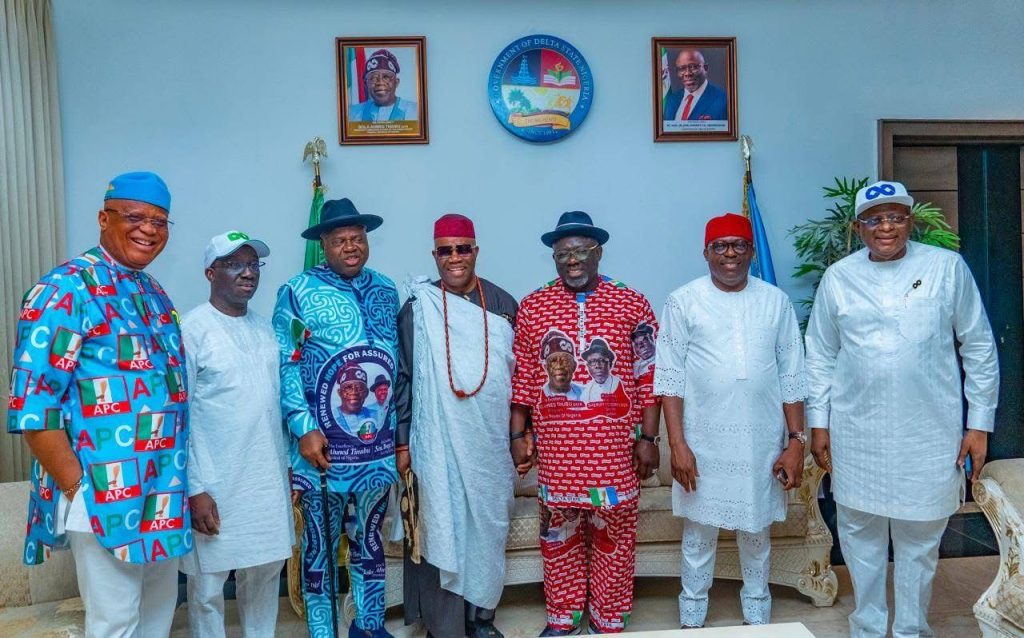
Senate President Godswill Akpabio has thrown his support behind the long-discussed proposal to create Anioma State, a move that could significantly reshape the political and administrative landscape of southern Nigeria. Speaking at the All Progressives Congress (APC) South-South Zonal Congress in Asaba, Akpabio made it clear that he sees no issue with the creation of the new state, describing it as a step toward development and regional balance.
The Anioma State proposal, which has been a recurring topic in the National Assembly, is being championed by Senator Ned Nwoko, who represents Delta North Senatorial District. The initiative is largely driven by calls to address perceived imbalances in state distribution, particularly in the South-East region, which currently has fewer states compared to other geopolitical zones.
Akpabio’s endorsement adds significant political weight to the proposal. According to him, if the creation of Anioma State is the primary demand coming from the South-South region, then it deserves serious consideration and support. He emphasized that increasing the number of states could foster more development, improve governance, and bring government closer to the people.
One of the most striking aspects of his statement was the proposed restructuring of state capitals. Akpabio suggested that Asaba, the current capital of Delta State, would become the capital of the new Anioma State. Consequently, Delta State would relocate its capital to Warri, a major commercial hub in the region. He described this transition as straightforward and not something that should generate fear or resistance.
He further noted that if the proposal successfully passes through the required legislative processes—including approval by the National Assembly and endorsement by state Houses of Assembly—it would result in the creation of an additional state in Nigeria. This, he argued, would not only enhance administrative efficiency but also stimulate economic growth in the affected regions.
However, the proposal has sparked mixed reactions among Nigerians, particularly across online platforms and public discourse. While some individuals see the creation of Anioma State as long overdue and a necessary step toward equity, others view it with skepticism. Critics argue that Nigeria’s core challenges—such as economic instability, insecurity, and governance issues—should take precedence over the creation of new states.
There are also concerns about the political implications of the move. Some observers question whether the push for Anioma State aligns more with regional interests in the South-East or the South-South, pointing to Akpabio’s somewhat ambiguous remarks. Others believe the proposal could trigger further agitation for new states across different regions, potentially complicating Nigeria’s already delicate federal structure.
Additionally, the idea of relocating Delta State’s capital from Asaba to Warri has generated its own debate. While Warri is widely regarded as a prominent economic center, some argue that Asaba has benefited from years of infrastructural development and investment, making it a difficult asset to relinquish.
Despite the controversies, the Anioma State proposal appears to be gaining traction, especially with high-level political backing. Whether it will ultimately materialize depends on a complex legislative process and the willingness of stakeholders to reach a consensus.
For now, Akpabio’s endorsement has reignited national conversation on state creation, regional identity, and the future of Nigeria’s federal system.


Responses