Claim Iran Destroyed U.S. Radar Systems Across Middle East Sparks Debate

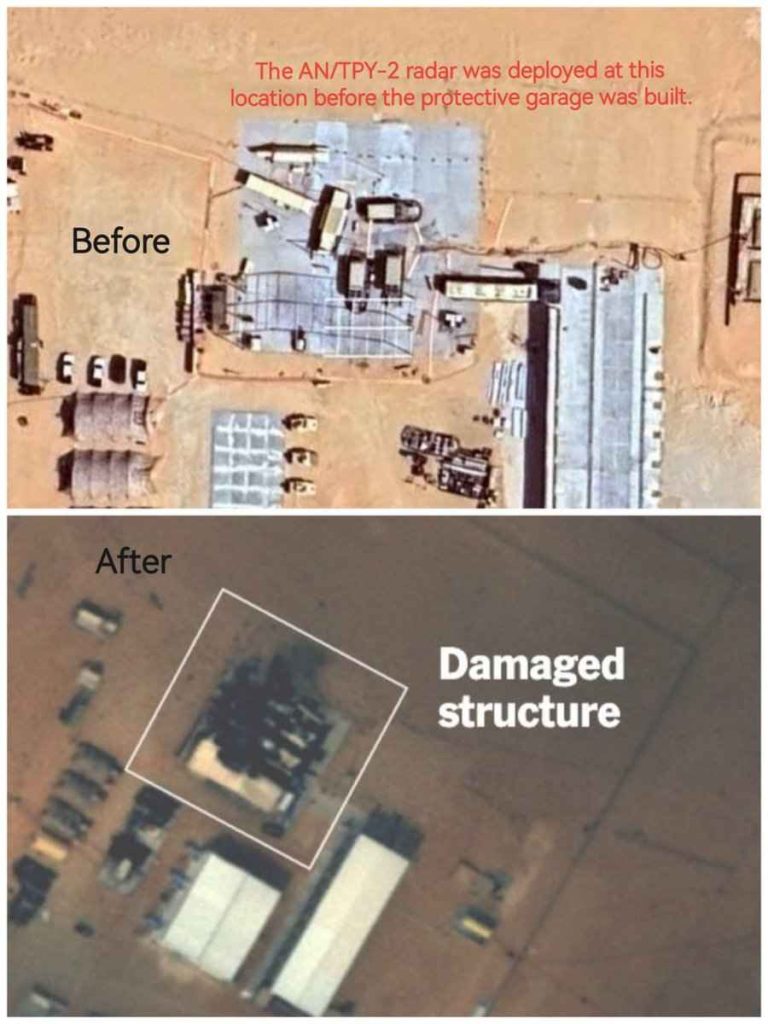
Claims that Iran has destroyed several United States missile-defense radar installations across the Middle East have generated significant debate online, after reports suggested multiple strategic facilities were struck in coordinated attacks.
According to posts circulating on social media and discussion forums, Iranian strikes allegedly targeted key early-warning radar systems linked to U.S. missile defense infrastructure in countries hosting American military assets.
The claims have not been independently verified, but the reports suggest that several radar installations may have been damaged.
Alleged Radar Sites Hit
One of the main facilities mentioned in the reports is located at Al Udeid Air Base, which hosts one of the largest U.S. military bases in the Middle East. The site reportedly houses an advanced AN/FPS-132 early warning radar system valued at about $1.1 billion.
According to the claims, satellite imagery indicates that the radar facility at the base sustained damage during the strikes.
Additional radar installations linked to the Terminal High Altitude Area Defense network were also reportedly targeted.
These include radar systems associated with the AN/TPY-2 radar, which plays a critical role in detecting and tracking ballistic missiles at long distances.
Countries Mentioned in the Reports
Several Middle Eastern countries that host U.S. defense infrastructure were listed as locations affected by the alleged strikes.
In Saudi Arabia, reports claim a radar facility connected to missile-defense operations was hit, with a hangar housing the radar system reportedly burned.
A similar strike was said to have occurred at Muwaffaq Salti Air Base in Jordan, where satellite imagery reportedly showed visible damage to another radar site.
Two additional installations linked to U.S. missile defense systems were also reportedly struck in the United Arab Emirates, with nearby infrastructure sustaining damage.
Strategic Importance of Radar Systems
Early-warning radar systems such as the AN/FPS-132 and AN/TPY-2 form a crucial part of the United States’ global missile defense network. These systems are designed to detect ballistic missile launches, track their trajectories, and relay information to interception systems such as THAAD.
If damaged or disabled, such systems could temporarily reduce the ability to detect incoming missiles early, potentially increasing the risk of successful missile strikes against regional targets.
The Middle East hosts several of these installations because of long-standing security concerns involving missile programs in the region.
Online Reactions and Skepticism
The claims quickly sparked heated discussions online, with users expressing sharply divided opinions.
Some commentators argued that such strikes, if confirmed, could weaken the United States’ regional missile defense coverage and expose gaps in its protective systems.
Others dismissed the reports as propaganda or misinformation, pointing out that wartime narratives often exaggerate damage inflicted on military infrastructure.
Several users also noted that in modern conflicts, satellite imagery can be interpreted in different ways and may not always provide definitive proof of destruction.
Ongoing Information Battle
Conflicts involving major military powers often involve not only battlefield operations but also intense information warfare. Competing narratives frequently emerge from different sides, making it difficult to immediately verify the accuracy of claims.
As of now, no official confirmation has been issued regarding the alleged destruction of these radar systems.
Analysts say that if such facilities were indeed damaged, repairs or replacements could take significant time and resources, depending on the extent of the destruction.
Until verified information emerges, observers say the reports should be treated cautiously while monitoring developments across the region.


Responses