Inside the Alleged Underground Bunker of Iran’s Supreme Leader Ayatollah Ali Khamenei

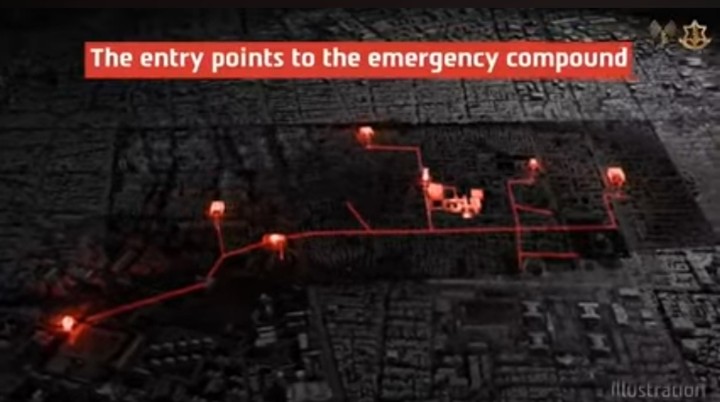
A video circulating online has stirred intense reactions after claiming to show the secret underground bunker allegedly linked to Iran’s Supreme Leader, Ali Khamenei. The footage suggests that the facility is not merely a simple shelter but an extensive underground complex designed to function as a self-contained command and survival center in the event of war or targeted attacks.
The video, shared widely across social media platforms, depicts what appears to be a fortified underground installation featuring multiple corridors, reinforced walls, operational rooms, and infrastructure capable of supporting long-term habitation. According to the narration accompanying the footage, the bunker was built as a strategic protection facility capable of housing senior government officials, military commanders, and essential staff during times of extreme crisis.
Observers who analyzed the video described the facility as resembling a “mini city” beneath the ground, equipped with command centers, communications infrastructure, and possibly emergency living quarters. While the authenticity of the footage and the precise location of the complex remain unverified, the clip has nevertheless fueled speculation about the level of security measures adopted by Iran’s leadership.
Underground bunkers have long been a staple of military strategy around the world. Nations facing geopolitical tensions often construct fortified underground facilities to protect political leaders and maintain command structures during wartime. Such installations are typically built with reinforced concrete, blast-resistant doors, air filtration systems, and independent power supplies to allow operations even in the event of missile strikes or aerial bombardment.
Iran, which has experienced decades of tensions with Western nations and regional rivals, has invested heavily in hardened military infrastructure. Analysts say underground facilities can serve multiple purposes beyond personal protection, including safeguarding command networks, storing sensitive equipment, and ensuring continuity of government in case of attacks.
The circulating video also sparked a wave of reactions on online forums where users debated the necessity of such bunkers. Some commenters criticized the idea of leaders living in heavily fortified underground environments, suggesting that it portrays fear or excessive caution. Others countered that bunker systems are a standard defensive measure used by many countries.
Supporters of this view pointed out that several nations, including global powers and smaller states alike, maintain underground command centers and shelters for political and military leaders. These structures are intended to protect leadership and maintain decision-making capabilities during emergencies such as war, nuclear threats, or major disasters.
Security experts note that the existence of underground facilities does not necessarily indicate weakness but rather reflects modern military planning. In an era where precision missiles and drone technology can strike targets with remarkable accuracy, many governments consider hardened underground locations essential for national defense.
Despite the strong reactions online, there has been no official confirmation from Iranian authorities regarding the specific bunker shown in the viral video or whether it is directly linked to the Supreme Leader. Without verified details, analysts caution that such footage should be treated carefully, as videos circulating online may sometimes combine real infrastructure footage with speculative or unrelated visuals.
Nevertheless, the discussion highlights the broader reality of geopolitical rivalry and the lengths to which governments go to protect strategic leadership structures during uncertain times.



Responses