Dangote Refinery Says Fuel Supply Now Surpasses Nigeria’s Demand

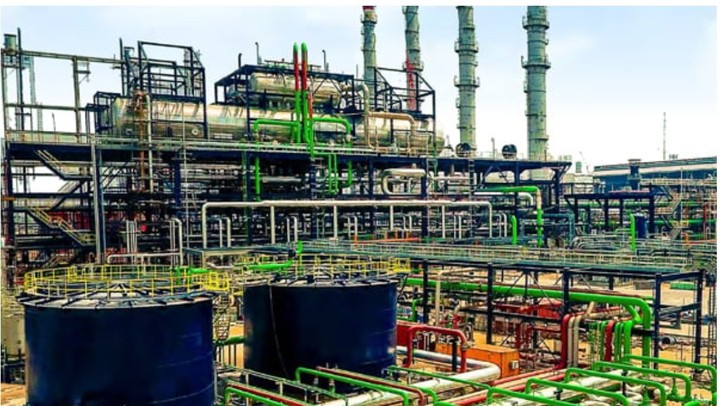
The Dangote Petroleum Refinery has announced that Nigeria’s fuel supply has now outpaced domestic demand, marking a major milestone in the country’s decades-long struggle for energy self-sufficiency.
In a statement issued on Saturday, Anthony Chiejina, Group Chief Branding and Communications Officer of Dangote Industries Limited (DIL), said the refinery currently loads 45 million litres of petrol and 25 million litres of diesel daily — volumes that, according to him, exceed national consumption levels.
Chiejina reaffirmed the company’s commitment to ensuring an uninterrupted nationwide supply of premium motor spirit (PMS) and automotive gas oil (diesel), stating that the refinery’s mission is anchored on supporting Nigeria’s energy stability and economic growth.
“Our refinery is currently loading over 45 million litres of PMS and 25 million litres of diesel daily, which exceeds Nigeria’s demand,” he said.
“We are working collaboratively with regulatory agencies and distribution partners to guarantee efficient nationwide delivery. Dangote remains steadfast in its commitment to meeting the energy needs of Nigerians.”
According to the company, the refinery’s large-scale output has already begun to stabilize the naira by reducing the country’s foreign exchange outflows linked to fuel imports. “We have reduced forex outflows and increased inflows, which in turn supports the naira and strengthens the economy,” Chiejina said.
Support for Import Tariff on Fuel
Commenting on the federal government’s recent decision to impose a 15 percent import tariff on refined petroleum products, Chiejina described the policy as “a good start” and “a patriotic move” to protect domestic industries from unfair competition.
“Dumping engenders poverty, discourages industrialisation, creates unemployment, and leads to revenue loss for the government,” he stated.
“Across the world, nations protect their local manufacturers from the threat of dumping. Dumping destroyed our textile industry, which was once a major employer of labour.”
He called on the government to strengthen monitoring mechanisms to prevent the influx of substandard or toxic fuel imports, which he said have historically undermined local production and investor confidence.
According to Chiejina, the tariff will encourage investment in Nigeria’s downstream oil sector, foster job creation, and promote industrial sustainability.
Commending Tinubu’s Economic Reforms
Chiejina praised President Bola Ahmed Tinubu’s “bold and visionary reforms,” saying the administration’s policies are reshaping Nigeria’s downstream oil and gas landscape.
“The latest tariff initiative reflects President Tinubu’s commitment to creating a stable, business-friendly environment that supports local investment and enhances energy security,” he said.
“His administration’s courageous reforms are unlocking new opportunities for industrial growth and national prosperity.”
He warned that failure to protect local industries could lead to large-scale dumping from foreign producers, which could “strangulate domestic refineries and cripple allied industries.”
Impact on Prices and the Economy
The Dangote official assured Nigerians that petrol prices would remain stable during the festive season despite fluctuations in global oil markets. Aliko Dangote, President of DIL, was quoted as saying:
“I want to assure Nigerians that the Dangote Refinery is fully committed to maintaining uninterrupted supply throughout the festive period. Nigerians can look forward to a Christmas and New Year free of fuel anxiety.”
Since beginning petrol production in September 2024, the refinery has reportedly played a key role in reducing the pump price of petrol from about ₦1,030 per litre in September 2024 to between ₦841 and ₦851 per litre by September 2025. Similarly, diesel prices dropped from as high as ₦1,700 per litre in 2024 to about ₦1,020 per litre in 2025, reflecting gains from local refining and reduced logistics costs.
The company said its operations have “eliminated recurring fuel scarcity and long queues” and provided a “buffer against external market volatility.”
Dangote Industries also noted that average petrol prices in Nigeria remain among the lowest in West Africa, averaging $0.60 per litre, compared to between $1.20 and $2.00 per litre in neighbouring countries — a reflection, it said, of the refinery’s positive impact on affordability and supply stability.
“This development underscores the refinery’s strategic importance to Nigeria’s economic recovery,” Chiejina concluded. “It not only guarantees local supply and energy security but also restores investor confidence and strengthens the naira.”


Responses