

Nigeria has officially unveiled a new standardized agricultural framework with the release of the Harmonized Fertiliser Recommendations for Nigeria – 2026 Edition, aimed at improving crop productivity, restoring soil fertility, and promoting more efficient fertilizer use across the country.
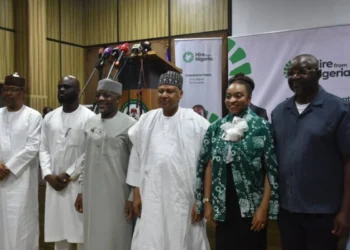
The document was presented in Abuja by the National Agricultural Development Fund (NADF) in collaboration with the Farm Input Support Services (FISS) to the Minister of Agriculture and Food Security, Senator Abubakar Kyari.
According to officials, the guide represents the first phase of a broader national input recommendation system designed to eventually cover all major crops and agricultural inputs across Nigeria.
The Executive Secretary of NADF, Mohammed Ibrahim, said the initiative began in April 2025 following growing concerns over the absence of a unified national fertilizer application standard. He explained that the project brought together key stakeholders from both public and private sectors to develop a science-based, practical framework for farmers.
Partners involved in the development include the Fertiliser Producers and Suppliers Association of Nigeria (FEPSAN), OCP Group, and the International Fertilizer Development Center (IFDC), all of whom contributed technical expertise and research data.
The new 2026 edition focuses primarily on five strategic crops critical to Nigeria’s food security: maize, rice, wheat, cassava, and cowpea, with plans already underway to expand coverage to additional crops.
The Chairman of the Editorial Committee, Professor Christogonus Daudu, noted that the new guide fills a long-standing gap since Nigeria’s last official fertilizer guidelines were released in 2012. He said the absence of updated standards had contributed to inefficiencies in fertilizer use, poor soil management, and reduced returns from government agricultural interventions.
To address these challenges, the manual translates complex scientific data into practical, farmer-friendly recommendations tailored to Nigeria’s six agro-ecological zones. It also introduces simplified application methods using bag-based measurements to support smallholder farmers.
The guide is built on the globally recognized “4Rs” principle of nutrient management—applying the right fertilizer source, at the right rate, at the right time, and in the right place. It also incorporates research from leading Nigerian agricultural institutes including the Institute for Agricultural Research, the Institute of Agricultural Research and Training, and the National Root Crops Research Institute.
In addition, the 2026 framework promotes advanced practices such as Integrated Soil Fertility Management, which combines organic and inorganic inputs to improve soil health, and Deep Fertiliser Placement, designed to reduce nutrient loss and improve efficiency in rice farming systems.
The manual also introduces cost-benefit analysis tools that align fertilizer recommendations with current market prices, helping farmers make more economically sustainable decisions.
Reacting to the development, Minister Abubakar Kyari praised the initiative but emphasized the importance of balancing productivity gains with profitability for farmers. He urged stakeholders to accelerate translation of the guide into local languages and adopt digital extension tools to improve access for rural farmers, especially in areas affected by climate-related farming challenges.
The government says the new framework is expected to strengthen food security, improve soil management practices, and enhance the efficiency of agricultural investments across Nigeria.
???? Stay Empowered with ZOEEB
Join our community for daily updates on jobs, skills, and financial growth opportunities.