Nigeria Spends ₦9 Trillion Importing Petrol

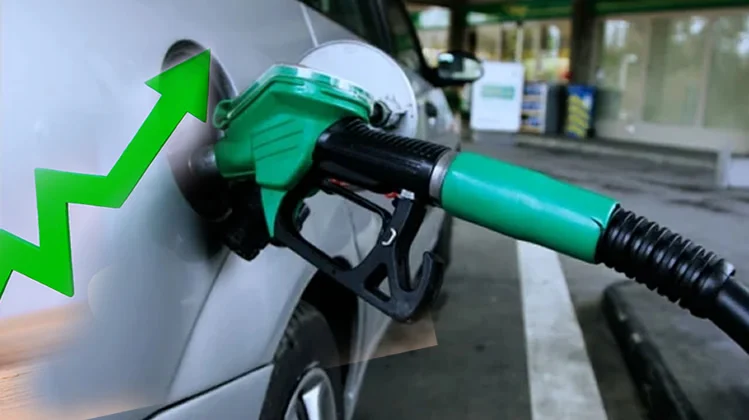
Nigeria’s heavy reliance on imported petroleum products continued throughout 2025, as oil marketers spent a staggering ₦8.96 trillion on the importation of Premium Motor Spirit (PMS), commonly known as petrol. This development persists despite ongoing investments in domestic refining capacity and repeated assurances that the country is moving toward energy self-sufficiency.
According to recent foreign trade data released by the National Bureau of Statistics, petrol remained one of Nigeria’s most imported commodities during the year. Although the total import bill declined by about 41.9 percent compared to the ₦15.42 trillion recorded in 2024, it still represented a 19.3 percent increase from the ₦7.51 trillion spent in 2023—the year fuel subsidy was officially removed under the administration of Bola Ahmed Tinubu.
The figures highlight a troubling contradiction: while Nigeria has made progress in expanding its refining infrastructure, it continues to depend heavily on foreign sources to meet domestic fuel demand. Analysts describe this as a “supply paradox,” where a country rich in crude oil resources still struggles to refine enough fuel locally.
Fuel consumption data from the Nigerian Midstream and Downstream Petroleum Regulatory Authority shows that total petrol usage in 2025 stood at 18.97 billion litres. Of this amount, approximately 62.47 percent—equivalent to 11.85 billion litres—was imported. Local refineries, including the much-anticipated Dangote Petroleum Refinery, supplied only 37.53 percent, or 7.54 billion litres.
A closer look at the quarterly breakdown reveals fluctuating import patterns. In the first quarter, Nigeria spent ₦1.76 trillion on petrol imports. This figure rose to ₦2.38 trillion in the second quarter, making petrol the country’s top imported commodity during that period. However, imports dropped significantly in the third quarter to ₦1.29 trillion before surging sharply in the fourth quarter to ₦3.54 trillion—the highest quarterly figure recorded in 2025. Notably, the fourth quarter alone accounted for nearly 40 percent of the total annual petrol import bill.
Nigeria sourced its petrol from a diverse range of countries, reflecting the global nature of its supply chain. Major suppliers included the Netherlands, the United States, Belgium, Brazil, and Togo. The Netherlands, in particular, emerged as a dominant supplier in the fourth quarter, with imports valued at over ₦1.22 trillion.
Despite the operational rollout of local refineries, including modular facilities and state-owned plants undergoing rehabilitation, structural challenges continue to hinder performance. Issues such as inadequate crude supply, logistical bottlenecks, and market inefficiencies have limited the capacity of domestic refineries to meet national demand.
Energy experts have raised concerns about the long-term implications of this dependency. Continued importation places significant pressure on Nigeria’s foreign exchange reserves and raises questions about energy security. It also undermines the expected benefits of local refining projects, which were intended to reduce imports and stabilize fuel prices.
Further compounding the issue are concerns about crude oil supply to domestic refineries. Industry analysts argue that existing arrangements, including forward sales and external commitments, have restricted the availability of crude for local processing. This has forced even large-scale refineries to rely partly on imported crude oil.
To address these challenges, experts recommend the establishment of a strategic petroleum reserve and more transparent regulatory practices. Strengthening domestic refining capacity, improving supply chain efficiency, and ensuring policy consistency are seen as critical steps toward reducing Nigeria’s dependence on imported fuel.
Ultimately, the continued importation of petrol—despite Nigeria’s vast oil resources—underscores deep structural issues within the country’s energy sector. Until these challenges are resolved, the goal of achieving true energy independence will remain elusive.





Responses