Jonathan Safe and Evacuated from Guinea-Bissau After Coup, Says Federal Government

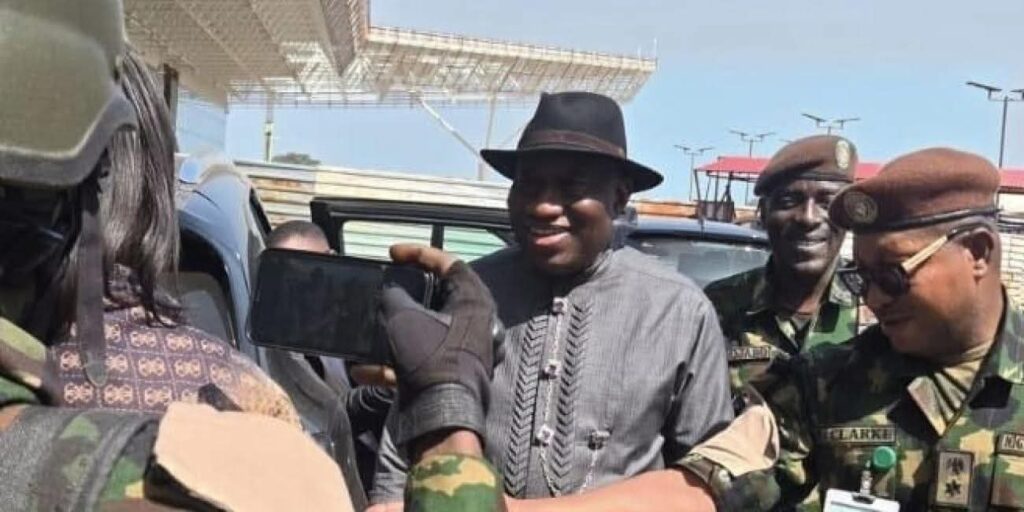
The Federal Government has confirmed that former President Goodluck Ebele Jonathan is safe and has successfully departed Guinea-Bissau following the unexpected military coup that toppled the West African nation’s government. The confirmation came on Thursday through the Ministry of Foreign Affairs, easing widespread concern after news of the coup sent shockwaves across the region.
Kimiebi Ebienfa, spokesperson for the Foreign Affairs Ministry, told journalists in Abuja that Jonathan had been swiftly evacuated alongside members of his delegation. According to him, the former president “left with a special flight with members of his delegation, including Mohamed Chambas,” a prominent ECOWAS diplomat.
Jonathan was in Guinea-Bissau as head of the West African Elders Forum (WAEF) Election Observation Mission, tasked with monitoring the country’s presidential and legislative elections held last Sunday. His presence in the country during the turbulent political atmosphere made the confirmation of his safety a matter of urgent national interest in Nigeria and across ECOWAS states.
Election Observers Condemn Coup
Before his departure, Jonathan—alongside Filipe Nyusi, former President of Mozambique and leader of the African Union Election Observation Mission, and Issifu Kamara, Head of the ECOWAS Election Observation Mission—issued a joint statement condemning the military takeover. They called the coup a blatant attempt to derail Guinea-Bissau’s fragile democratic process.
The observers urged citizens to remain calm and pledged continued support to the Bissau-Guinean people during what they described as a “sensitive period.” They noted the importance of defending peace, stability, and the democratic aspirations of the nation.
Nigeria Strongly Condemns the Takeover
The Federal Government condemned the events in Guinea-Bissau “in the strongest terms,” describing them as an unconstitutional seizure of power. In its official statement, the Ministry of Foreign Affairs expressed “profound dismay and deep concern,” stressing that the military intervention violated the ECOWAS Protocol on Democracy and Good Governance, which forbids unconstitutional changes of government.
Nigeria, a key regional stabilizer within ECOWAS, warned that coups threaten not only the stability of individual nations but also the overall security architecture of West Africa.
Chaos in Bissau as Soldiers Take Control
Guinea-Bissau descended into confusion on Wednesday after military officers declared that they had assumed “total control” of the country. Borders were immediately shut, gunfire erupted around key government installations—including the presidential palace—and troops blocked major streets.
General Denis N’Canha, head of the presidential military office, announced that a unified command of the armed forces would govern the country until further notice. The military justified its actions by alleging that it had uncovered a plot involving local drug barons and illegal arms importation aimed at undermining the constitutional order.
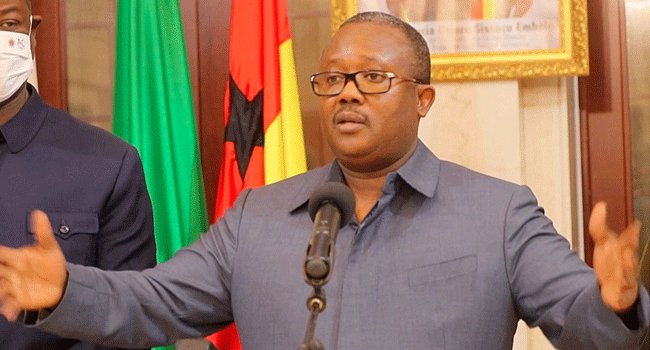
Speaking to France24 by phone, President Umaro Sissoco Embalo confirmed grimly, “I have been deposed.” Reports indicated he was sheltering inside a building behind military headquarters alongside the Interior Minister and the army chief of staff.
Amid the chaos, both Embalo and opposition candidate Fernando Dias had separately claimed victory in Sunday’s elections, with provisional results initially expected on Thursday. The coup halted the tallying process entirely.
Borders Reopened as Tension Remains High
By Thursday evening, the military announced the reopening of Guinea-Bissau’s borders. General Lansana Mansali, Inspector General of the Armed Forces, informed journalists that “all borders are now open,” though uncertainty persists as no clear political roadmap has been presented.
Security had already been heightened for the elections, with more than 6,700 personnel—including ECOWAS Stabilisation Forces—deployed across the country. Guinea-Bissau’s turbulent political history includes four successful coups and numerous failed attempts since gaining independence, making this latest episode yet another reminder of the nation’s enduring instability.
Relief in Nigeria
In Nigeria, reactions to Jonathan’s safe evacuation have been largely positive, with many expressing gratitude that the former president was unharmed. Despite widespread political debate online, one common thread among citizens remained relief that a statesman often regarded as a symbol of peaceful democratic transfer of power had safely escaped a volatile situation.
Nigeria’s government assured that it will continue monitoring developments in Guinea-Bissau and remain committed to regional peace and the restoration of constitutional order.



Responses