ECOWAS Suspends Guinea-Bissau After Military Takeover, Demands Immediate Restoration of Constitutional Order

The Economic Community of West African States (ECOWAS) has moved swiftly in response to the sudden military takeover in Guinea-Bissau, announcing the country’s immediate suspension from all decision-making activities within the regional bloc. The decision was revealed in a strongly worded communiqué issued following an extraordinary virtual meeting of the ECOWAS Mediation and Security Council (MSC), held at the highest level of Heads of State and Government and chaired by Sierra Leone’s President, Julius Maada Bio.
The session, convened barely 24 hours after soldiers seized power in Bissau, underscored the gravity with which the regional body views yet another disruption of democratic governance in West Africa. ECOWAS expressed deep alarm over the unfolding crisis, noting that Guinea-Bissau’s citizens had shown remarkable resilience and commitment to democracy by participating massively in the November 23 presidential election—only for their votes to be overshadowed by an abrupt military intervention.
In its communiqué, the MSC condemned the coup “in the strongest possible terms,” labelling it an outright subversion of the people’s will. ECOWAS described the events of November 26, 2025, as an unacceptable assault on constitutional order and emphasized that no attempt to legitimize the coup would be tolerated. The bloc demanded that the junta immediately allow the National Electoral Commission to release the official presidential election results, which were expected before the military takeover halted all electoral processes.
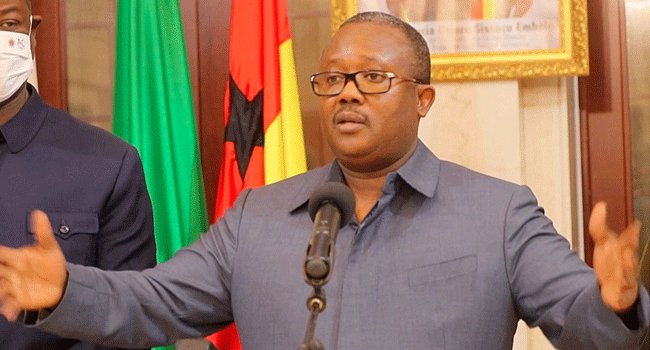
The regional body also demanded the unconditional release of all detained officials, including President Umaro Sissoco Embaló, senior electoral officers, and political stakeholders reportedly being held by the mutineers. President Bio reiterated that West Africa “cannot allow the illegal abortion of a democratic process,” stressing that the people of Guinea-Bissau—having demonstrated faith in democratic institutions—deserve protection from anti-democratic forces.
A key focus of the meeting was the safety of ECOWAS personnel and international observers who had been deployed to monitor the election. With reports of escalating uncertainty in Bissau, the bloc urged the military authorities to guarantee the security of these observers and, where required, facilitate their safe evacuation. ECOWAS held the coup leaders wholly responsible for the safety of civilians, public infrastructure, and private property during this period of instability.
Invoking the ECOWAS Protocol on Democracy and Good Governance, the MSC formally suspended Guinea-Bissau from participating in any ECOWAS decision-making institutions until constitutional order is restored. This measure mirrors similar actions taken in recent years against Mali, Burkina Faso, Guinea, and Niger—highlighting the increasing fragility of democratic governance within the West African sub-region.
In an effort to expedite mediation, the bloc mandated its Chair to lead a high-level mission to Bissau. The delegation is expected to include Togo’s President Faure Gnassingbé, Cabo Verde’s President José Maria Neves, Senegal’s President Bassirou Diomaye Faye, and ECOWAS Commission President Omar Touray. Their task will be to assess the situation on the ground, engage with all stakeholders, and push for a swift restoration of democratic authority.
ECOWAS also called on the Guinea-Bissau Armed Forces to immediately return to their barracks and comply with their constitutional responsibilities. The ECOWAS Stabilisation Mission already deployed in the country has been directed to continue safeguarding national institutions and maintaining stability until the crisis is resolved.
Reaffirming its commitment to closely monitor developments, ECOWAS warned that it reserves the right to apply additional measures—including targeted sanctions—against individuals or groups found culpable for undermining Guinea-Bissau’s democratic process. The communiqué ends with a reminder that the region’s stability is interconnected, and that persistent coups pose a dangerous threat to collective security, governance, and regional integration.

Responses