Inside Enugu’s Massive 10,000-Hectare Songhai Farm Project Transforming Agriculture

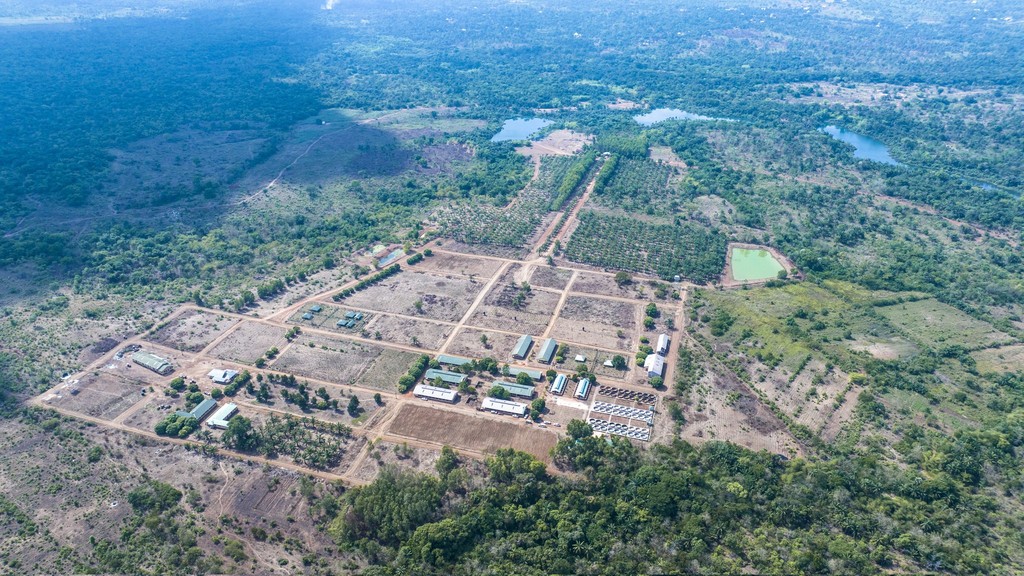
A large-scale agricultural project in Enugu State is gaining widespread attention following the release of aerial images showcasing the impressive expanse of the Enugu Tribu Songhai Farms located in Obunofia Ndiuno, within Ezeagu Local Government Area.
Spanning an estimated 10,000 hectares, the integrated farm project is being described as one of the most ambitious agro-industrial developments in the region. The aerial views reveal a complex and diversified agricultural hub, featuring natural lakes, multiple earth and concrete fish ponds, water supply systems, and a variety of livestock facilities including piggeries, poultry houses, and other animal housing units.
In addition to livestock and aquaculture, the farm also incorporates large-scale crop cultivation, including palm tree plantations, as well as training centres designed to equip individuals with modern agricultural skills. The project appears to follow the Songhai model of integrated farming, which emphasizes sustainability, resource recycling, and multi-sector agricultural productivity.
Observers say the development signals a renewed focus on agriculture as a viable economic driver, especially at a time when Nigeria continues to grapple with economic diversification challenges. Many have pointed to the Enugu project as a practical example of how states can leverage agriculture not just for food production, but also for employment generation and industrial growth.
Supporters of the initiative have praised the scale and ambition behind the farm, describing it as a step in the right direction. Some believe such projects could position Nigeria as a leading agricultural powerhouse in West Africa if properly managed and replicated across other states.
However, reactions have been mixed. While many have expressed admiration for the project, others have raised questions about its actual size and long-term sustainability. Some skeptics have doubted whether the farm truly spans 10,000 hectares, calling for more transparency and verification of the claims.
There are also concerns about continuity. Given Nigeria’s history of abandoned government projects, some observers are worried about whether future administrations will maintain and expand the initiative or allow it to decline after the current leadership exits office.
Additionally, security concerns remain a recurring theme in discussions about agriculture in Nigeria. Issues such as farmer-herder conflicts and rural insecurity continue to pose risks to large-scale farming operations. For projects like the Enugu Songhai Farms to succeed long-term, stakeholders say there must be strong policies in place to protect investments and ensure stability in farming communities.
Despite these concerns, many Nigerians remain optimistic. The integrated nature of the project—combining aquaculture, livestock, and crop production—offers a blueprint for modern farming that goes beyond subsistence agriculture. It reflects a shift toward agribusiness, where farming is treated as a structured, profit-driven enterprise.
Experts argue that if such initiatives are backed by proper funding, mechanization, and consistent policy support, agriculture could indeed rival oil as a major source of national revenue. Beyond economic benefits, projects like this also have the potential to reduce unemployment, improve food security, and strengthen local economies.
As conversations continue around Nigeria’s economic future, the Enugu Tribu Songhai Farms stand as a bold experiment in agricultural transformation—one that could either become a model for success or a missed opportunity, depending on how it is sustained and scaled.




Responses